
Menlo Park Bathroom Remodel Cost Per Square Foot: What to Expect and Why
Costs typically run $350 to $750 per square foot, and high-end projects can exceed $900. But square footage alone never explains the number — here's what actually drives it, what inspectors enforce, and where budgets quietly go wrong.
Menlo Park bathroom remodel cost per square foot typically ranges from $350 to $750 for a standard remodel, and high-end projects can exceed $900 per square foot depending on finishes and structural changes. We've helped homeowners navigate these numbers for years, and the same question comes up every time: why does the price vary so much for bathrooms that look similar in size?
The biggest misconception is that square footage alone determines cost. In one Menlo Park home near the Allied Arts neighborhood, a small 60-square-foot bathroom ended up costing more than a larger hall bath because of outdated plumbing and subfloor damage. Ignoring hidden conditions often leads to change orders and inspection delays.
If you're also comparing layouts and fixtures, our bathroom remodeling page breaks down how design choices affect your total investment.
1. Why cost per square foot isn't simple division
When homeowners search for a cost-per-square-foot figure, they often assume the calculation is simple: total budget divided by bathroom size. In practice, cost per square foot reflects labor intensity, infrastructure upgrades, and compliance with California standards — not just tile and paint.
Bathrooms are dense with systems. Within 40 to 100 square feet, we install water supply lines (often Type L copper or PEX-A), 2-inch ABS drain lines with proper slope at 1/4 inch per foot, GFCI-protected receptacles, exhaust fans rated at 80–110 CFM, cement backer board, waterproof membranes such as Schluter®-KERDI, and porcelain tile set with polymer-modified thinset. The National Kitchen & Bath Association sets planning guidelines for spacing and clearances, and ignoring those standards can create functional and resale issues.
One client once tried to lower their cost per square foot by keeping an old cast-iron tub and original galvanized piping. During demolition, we discovered significant corrosion and reduced water pressure. Replacing the plumbing added upfront cost, but it prevented leaks that could have damaged framing and voided insurance coverage.
Warning signs your cost per square foot may trend higher
- Visible water damage or soft subfloor around the toilet flange
- Outdated electrical without GFCI/AFCI protection
- Structural movement or cracked tile indicating framing issues
In our experience, overlooking these conditions is the primary financial risk. Water intrusion behind tile can lead to mold remediation and failed inspections. For layout best practices, we also reference NKBA planning resources at nkba.org.
2. Menlo Park codes, permits, and what inspectors enforce
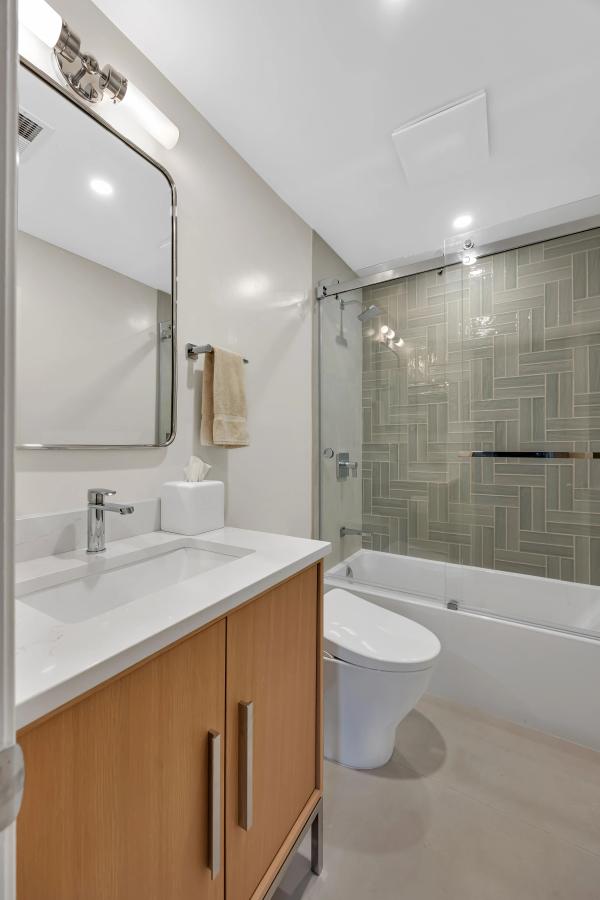
Menlo Park sits in a high seismic zone near the San Andreas Fault, and the city enforces California's statewide building standards with local oversight. Bathroom remodel costs per square foot often increase when projects require structural anchoring, plumbing upgrades, or energy-efficiency improvements to meet current codes. Permits are required for most bathroom remodels involving plumbing, electrical, or structural changes through the City of Menlo Park Building Division.
- 2022 California Building Standards Code (Title 24, Part 2) — governs structural alterations, seismic bracing, and moisture protection. In a seismic region like Menlo Park, improper anchoring of heavy fixtures or inadequate framing can result in failed inspections and safety hazards.
- 2022 California Plumbing Code (Title 24, Part 5) — requires proper venting, trap arm lengths, and approved materials such as ABS or copper. Violations can lead to sewer gas leaks, water damage, and inspection rejection.
- 2022 California Energy Code (Title 24, Part 6) — mandates high-efficacy lighting and controls. Non-compliant lighting can delay final sign-off and increase long-term utility costs.
- 2022 California Electrical Code (Title 24, Part 3) — requires GFCI/AFCI protection in bathroom circuits. Skipping this exposes homeowners to shock risks and insurance issues.
Best practice: submit complete plans showing fixture locations, load calculations, and ventilation specs before demolition. We coordinate inspections at rough plumbing, rough electrical, and final stages to avoid rework that increases cost per square foot.
3. Budget mistakes that quietly raise the number
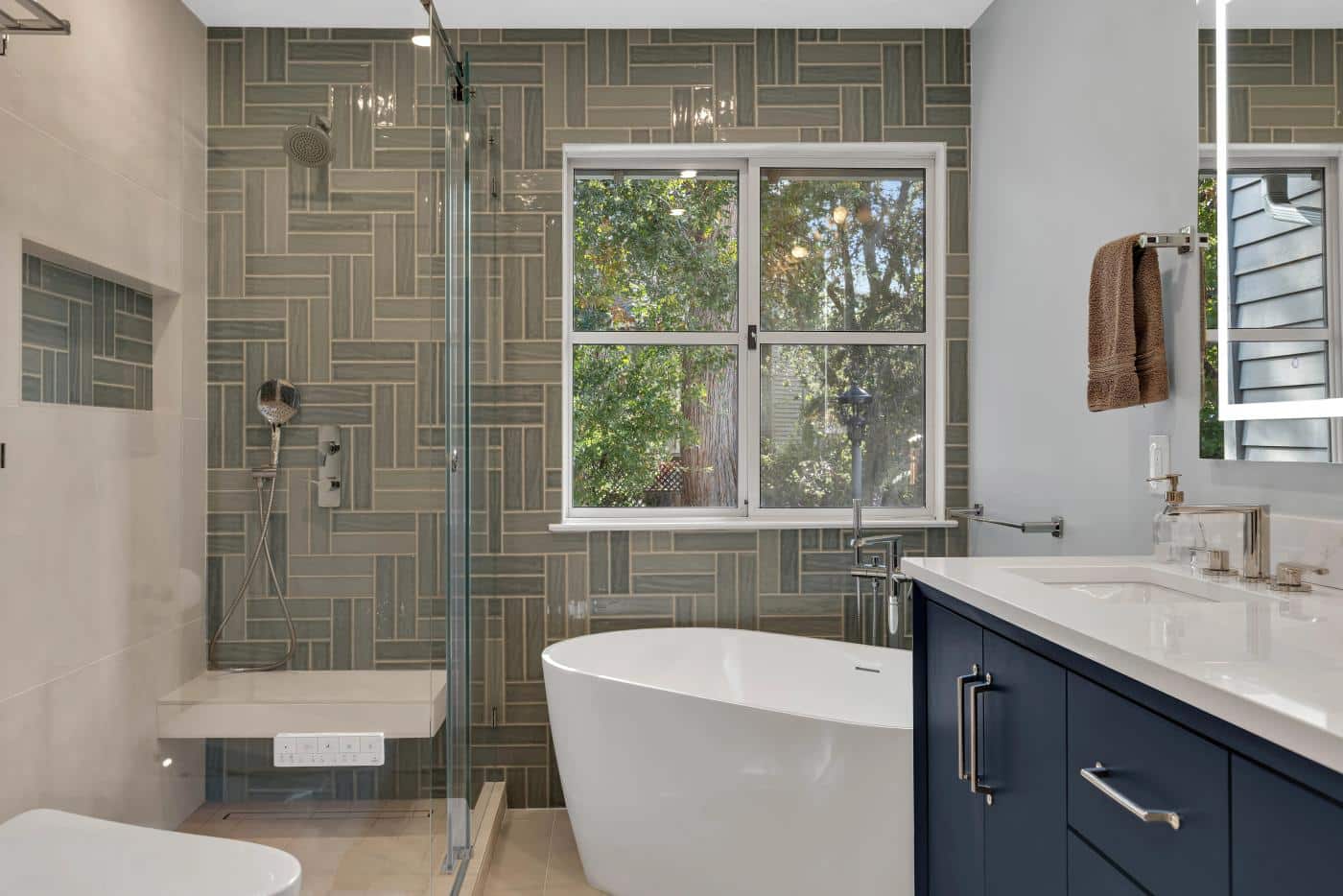
The fastest way to inflate your cost per square foot is changing scope mid-project. Every layout shift after rough plumbing requires reopening walls, reordering materials, and rescheduling inspections.
We've seen this firsthand. One homeowner selected large-format 24x48 porcelain tiles after framing was complete. The added weight required additional blocking and a flatter substrate. We installed self-leveling underlayment to meet manufacturer tolerances of 1/8 inch over 10 feet. The aesthetic upgrade was worthwhile, but the late change increased labor and material costs.
Common mistakes to avoid
- Underestimating demolition complexity in older homes with plaster walls
- Choosing fixtures without verifying rough-in dimensions
- Skipping waterproofing membranes behind tile
A typical hall bathroom remodel in Menlo Park may take 6–8 weeks from demolition to final inspection. Primary bathrooms with layout changes can extend to 10–12 weeks. Cost per square foot often falls between $350 and $750, while luxury projects with custom cabinetry, curbless showers, and radiant floor heating may range from $800 to $1,000+ per square foot.
Three variables that drive the price
- Site complexity and hidden damage
- Material and fixture selections
- Total scope, including structural or layout changes
Clear plans, early selections, and realistic allowances keep your project on schedule and within expected range.
Frequently asked questions
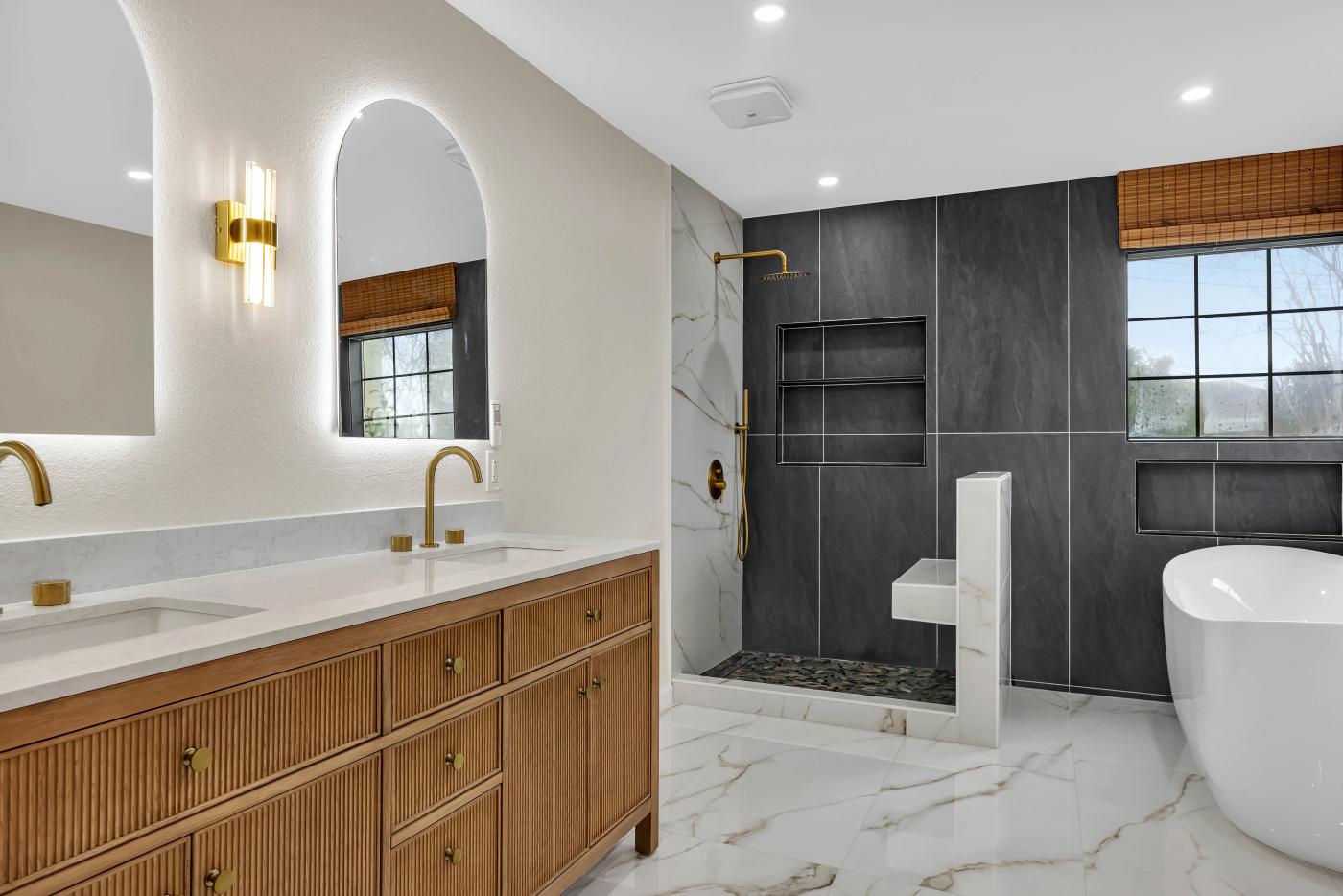
What is the average bathroom remodel cost per square foot in Menlo Park? In Menlo Park, the average typically ranges from $350 to $750 for mid-range finishes. Projects with custom cabinetry, natural stone, curbless showers, or structural changes may exceed $900 per square foot. Smaller bathrooms often show a higher cost per square foot because fixed expenses — permits, design, mobilization — are spread over fewer square feet. Older homes may require plumbing updates to meet current California codes, and seismic considerations can add framing or anchoring work. Labor costs in the Bay Area are also higher than state averages.
Why does cost per square foot vary so much between projects? Bathrooms combine multiple trades in a tight space. A project that keeps the existing layout and uses stock vanities will cost far less than one that relocates plumbing lines and installs custom millwork. Material selection plays a major role — porcelain tile may cost a fraction of book-matched marble, and prefabricated shower pans differ significantly from site-built waterproofed showers using bonded sheet membranes. Hidden conditions are another factor: water-damaged framing, outdated galvanized piping, or insufficient electrical capacity can all increase scope.
How much should I budget for a 60-square-foot bathroom? For a 60-square-foot bathroom in Menlo Park, a mid-range remodel may range from $21,000 to $45,000 depending on design and infrastructure needs. Luxury upgrades could push totals beyond $55,000. A straightforward cosmetic update with minimal plumbing adjustments may stay on the lower end; expanding a shower, upgrading the electrical panel, or adding radiant floor heating can increase costs quickly. Timeline typically falls between 6 and 8 weeks. These figures are preliminary benchmarks for informational purposes only and do not constitute a binding quote — an on-site evaluation is required for a final proposal.
Can I reduce costs by doing part of the remodel myself? Homeowners can reduce costs by handling demolition, painting, or hardware installation, but plumbing, electrical, and waterproofing should remain in professional hands. California requires permits for most bathroom remodels involving system changes, and licensed trades must complete certain work to pass inspection. Improper waterproofing is the most common DIY failure we encounter — skipping a bonded membrane or misapplying liquid waterproofing can allow moisture behind tile, leading to mold and subfloor rot. Correcting that damage often costs more than hiring professionals initially.
What warning signs suggest my remodel will cost more? Soft or sagging floors near the toilet or tub, low water pressure from corroded pipes, and frequent breaker trips when using hair dryers all point to underlying plumbing or electrical deficiencies. Addressing them is not optional if you want to pass inspection and avoid long-term damage. We recommend a thorough pre-construction walkthrough, including moisture meter readings and camera inspection of drain lines when needed.
Are there common bathroom issues specific to Menlo Park homes? Yes. Many homes here were built decades ago and may contain galvanized steel supply lines, minimal insulation, and subfloors not designed for modern tile loads. Seismic activity also requires secure anchoring of heavy fixtures and proper bracing. We frequently encounter moisture damage from inadequate ventilation — bathrooms without properly sized exhaust fans, typically 1 CFM per square foot with a minimum of 50 CFM, can trap humidity and lead to mold growth. Limited electrical capacity in older panels is another common issue.
What should I look for when hiring a contractor? Look for a contractor licensed through the California Contractors State License Board with active general liability and workers' compensation insurance. Verify permit history and ask how they coordinate inspections with the City of Menlo Park. Review detailed scopes of work rather than lump-sum numbers — a clear proposal should outline demolition, plumbing, electrical, waterproofing system, tile installation method, and fixture specifications. Transparent planning is the best defense against unexpected increases in cost per square foot.
When should I schedule a remodel instead of waiting? Bathroom remodeling is rarely an emergency, but persistent leaks under the sink, cracked shower pans, loose tiles, or recurring mold odors indicate moisture intrusion. Shut off water to active leaks, document visible damage, and avoid using fixtures that show structural instability. Delaying necessary work increases the risk of subfloor rot, framing damage, and failed inspections during a future home sale. Addressing issues early often keeps your cost per square foot lower than waiting until multiple systems fail at once.
Ready to understand your real cost per square foot?
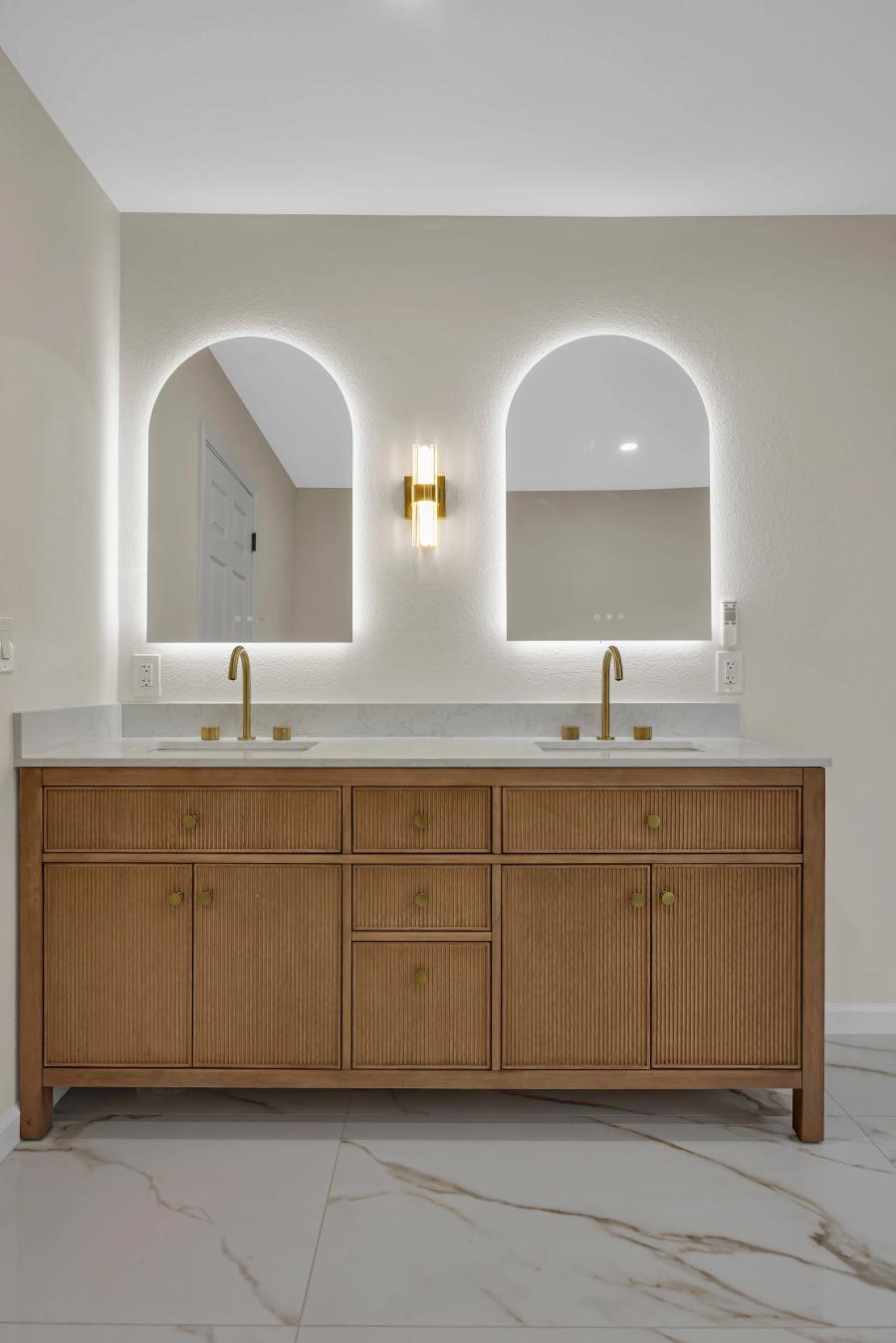
The most accurate way to understand your number is an on-site assessment. We review existing plumbing, framing, electrical capacity, and finish goals before outlining a detailed scope of work — which prevents mid-project surprises and keeps inspections moving. We provide transparent ranges, explain where upgrades add value, and identify where you can scale back without compromising performance or safety.