

ADU Permit Services in Redwood City, CA
We prepare the plan set, submit to San Mateo County, and respond to every correction letter — submission to final inspection sign-off.
An ADU Permit Is a Coordinated Package — Not One Document
The ADU permit application — the formal submission to San Mateo County's building department that starts plan check — typically includes a site plan, floor plans, elevations, structural details, Title 24 energy calculations, and sometimes a geotechnical report.
Every item has to be consistent with every other item. A site plan showing a 5-foot rear setback has to match the floor-plan dimensions. The Title 24 calculations have to reflect the actual window specs in the elevations. When anything is inconsistent, the plan-check reviewer flags it — and that flag is a correction letter: a written list from the building department identifying items that don't meet code or are missing information. The number of correction rounds you go through is determined by how complete and consistent the first submission was.
We prepare the full package in-house — site plan, architectural drawings, Title 24 calculations, and any structural details the county requires — and submit it directly. Because design, energy calculations, and structural coordination all happen under one roof, internal inconsistencies are caught before the package leaves our office rather than discovered in a correction letter weeks later. When a correction letter does come back, we read it, prepare the revisions, and resubmit. You don't interpret a building-department comment, and you don't coordinate between a separate designer, engineer, and permit expediter.
Permit prep & the construction that follows — one team, CA License #1119304.
Working With San Mateo County's Building Department
Incorporated cities in San Mateo County — Redwood City, San Mateo, San Carlos, Foster City, and others — each have their own permit intake process layered on top of county requirements. We submit ADU applications directly to the San Mateo County Building Department, and for projects inside an incorporated city we also coordinate with that city's intake. These aren't the same submission: different forms, different contacts, different response timelines.
Redwood City processes applications through its Community Development department. Knowing how that office formats correction letters — and what detail it expects on revised plan sets — reduces turnaround on each cycle. We've submitted enough packages through this specific office to recognize what triggers a first-round comment and what clears cleanly. That's what local familiarity means in practice: we know which desk the application lands on.
Why a Three-Month Permit Stretched to Eight
What drives timelines long isn't project complexity — it's document fragmentation. When different professionals prepare different sections without coordinating, the inconsistencies compound. A setback on the site plan disagrees with the floor plan. An energy calc references a window that doesn't match the elevations. Each gap becomes a correction item; each item adds a review cycle.
The familiar pattern: plans by one professional, Title 24 by a second, structural by a third, and no one owns the full package. A correction letter flags a discrepancy between beam sizing on the floor plan and the structural calcs — the designer calls it an engineering question, the engineer needs an updated floor plan first, and the permit stops moving. We prepare the complete set in-house precisely to eliminate that gap: every drawing produced by the same team, reviewed against the same set, submitted as one internally consistent package.
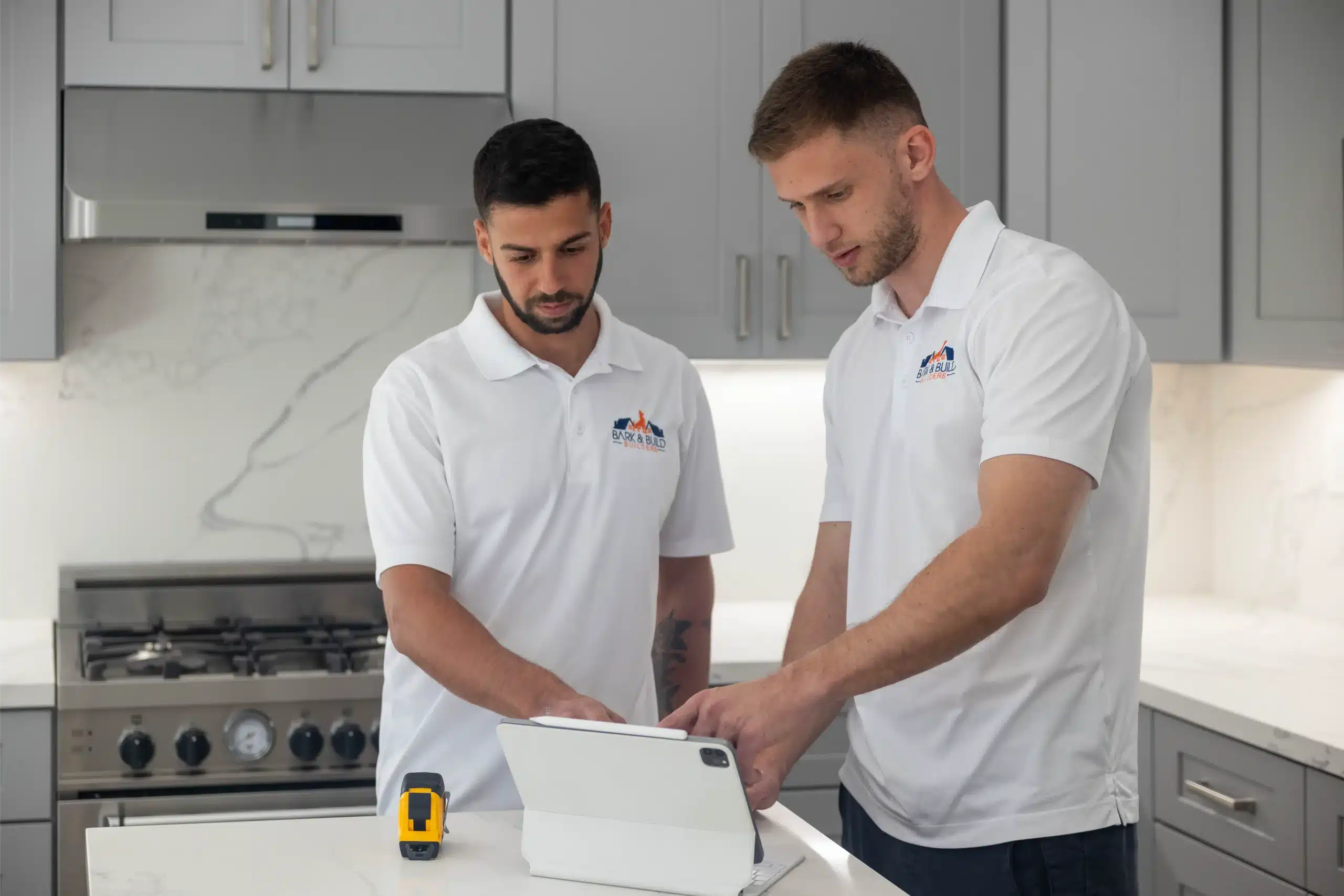
We Handle Every Correction Letter Directly
A correction letter is the plan-check reviewer's formal written list — every item in the application that doesn't meet code or is missing information. When one arrives on a project we're managing, our team works each flagged item line by line, prepares revised sheets where required, and resubmits a complete written response directly to the building department. You receive a plain-language summary of what changed and why. You don't research code sections, track down separate professionals, or re-explain the scope to anyone.
This matters most on the second and third rounds — where partial responses generate partial approvals and another cycle, and full responses close the loop. And because CA License #1119304 covers the construction that follows issuance, the inspector who walks your project is reviewing work done by the same contractor who prepared and submitted the permit documents.
A Complete ADU Permit Package in San Mateo County
San Mateo County's plan check requires a specific set of documents — every item must be present and internally consistent. Our in-house design team prepares every document on this list, submitted as a single, internally reviewed set.
The Permit Timeline: Seven Phases
Pre-Application Site Review
Before any drawings, we review the parcel — setbacks, lot coverage, height limits, existing structures, utility points — so the plan set isn't drawn against a constraint that generates a correction letter. For known soil or slope conditions (including hillside parcels west of El Camino Real), we flag whether a geotechnical report is likely required before any design cost is incurred.
Plan Set Preparation
The in-house team draws the complete set — site plan, floor plans, elevations, structural details — with Title 24 calculations completed concurrently by the same team, not outsourced after the fact. The set goes through an internal review before submission.
Permit Application Submission
The completed application is submitted directly. For Redwood City projects this goes through Community Development intake; for unincorporated parcels, directly to the county building department.
Plan Check Review
The building department's technical review examines every sheet for code compliance. Standard turnaround at San Mateo County runs three to five weeks for a complete, first-time submission.
Correction Letter Response
If a correction letter is issued, we prepare the full written response and revised sheets, addressing each item specifically and completely, and resubmit without waiting on coordination between separate professionals.
Permit Issuance
The building department approves plan check and issues the permit — the authorization to begin construction — and establishes the inspection milestones the project must pass in sequence.
Inspection Coordination
Milestones for a typical ADU — foundation, framing, MEP rough-in, insulation, and final — must each pass before the next phase proceeds. Because we manage the permit and perform the construction, scheduling is handled by the same team doing the work.
Redwood City Neighborhoods & San Mateo County Jurisdictions
Redwood City projects span the bayfront (Friendly Acres, Palm Park) to the hillside parcels west of El Camino Real in Emerald Hills — and lot size, slope, and utility points change what the county requires. We've submitted through each of these building departments and know what each office expects before the package goes in, not after a correction letter explains it.
ADU Permitting Questions
The resource page ADU Permit Process explains how the San Mateo County process works — the rules, timelines, and sequences that apply to any ADU project regardless of who manages it. This page describes what Bark and Build does as a licensed contractor: preparing every drawing in-house, submitting directly, and owning every correction-letter response from first round to issuance. One is a reference guide; this is a specific service performed under CA License #1119304.
No. We produce the complete plan set under one roof — site plan, floor plans, elevations, structural details, and Title 24 calculations are all prepared by our in-house team. You don't need to arrive with drawings in hand or manage a separate design professional. The permit package is built as part of the service.
The property address and a general description of what you want to build — detached ADU, garage conversion, JADU, or attached addition. That's enough for an initial parcel review. We'll identify site constraints, confirm what the county requires for your project type, and explain the process before any design work begins.
We read the correction letter, prepare the full written response and any revised sheets, and resubmit directly to the building department. You receive a plain-language summary of what was flagged and what changed. You don't coordinate between separate professionals or interpret code references yourself.
Yes. CA License #1119304 covers both the permit preparation and the construction that follows. The same licensed team that prepared and submitted the package manages construction and coordinates inspection scheduling — there's no handoff to a separate contractor.
All of them, including Friendly Acres, Palm Park, Emerald Hills, and properties along the El Camino Real corridor. We also submit across every San Mateo County jurisdiction — incorporated cities and unincorporated areas — and are familiar with each building department's intake and correction-letter formats.
Start Your ADU Permit Process — We Handle It From Here
Tell us the property address and what kind of ADU you're planning — detached, garage conversion, JADU, or attached addition. We'll confirm what San Mateo County requires for your parcel and explain the process. You don't need drawings ready or to know which documents are required.