
ADU Permitting in Santa Clara County
The state sets the floor, but the South Bay is where the real differences show up — pre-approved plan programs, San Jose's condo-conversion pathway, and foothill hazard zones that change the rules. Here's how to permit an ADU across Santa Clara County.
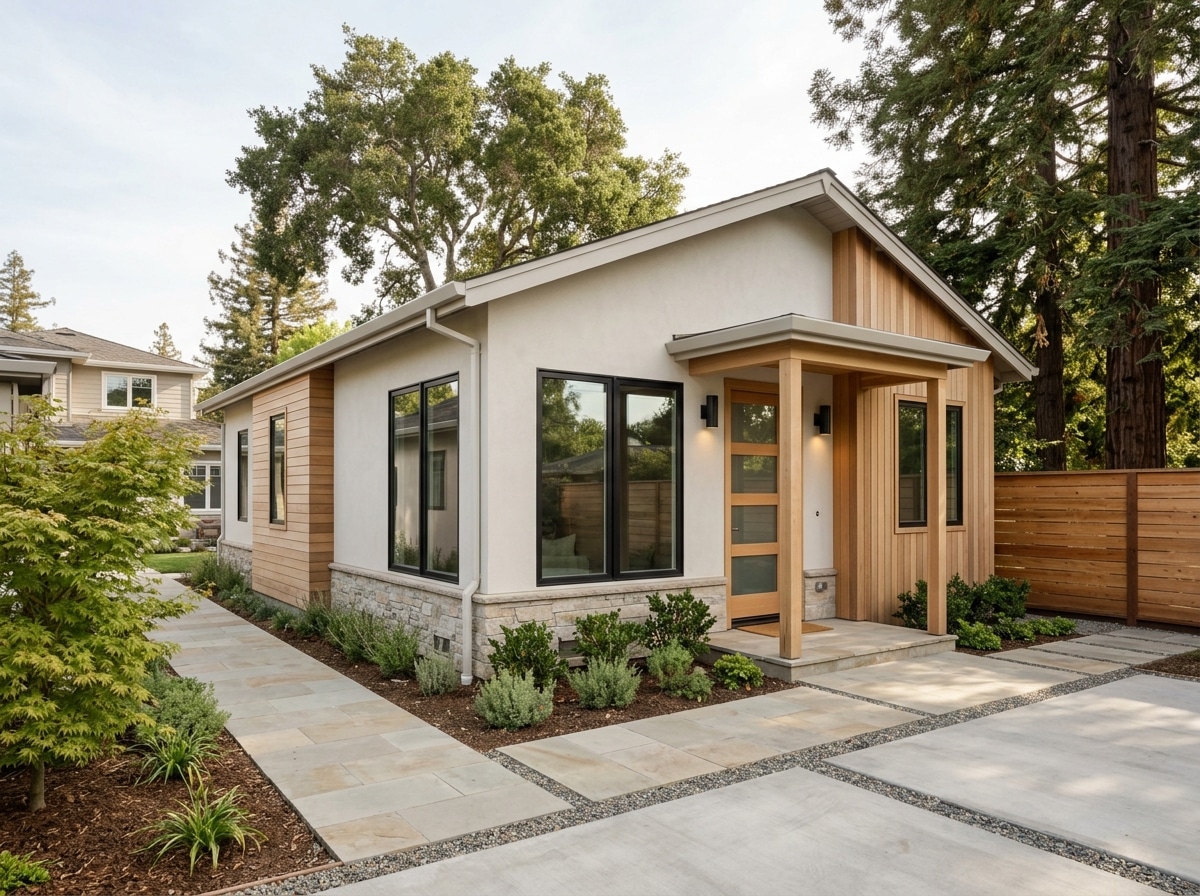
Santa Clara County has become one of the most active ADU markets in California, and for good reason: strong rental demand near the valley's job centers, generous state rules, and — increasingly — local programs built specifically to make ADUs faster to permit. If you're weighing a backyard unit in San Jose, Sunnyvale, Cupertino, or anywhere in the county, the opportunity is real.
But "Santa Clara County ADU rules" isn't one rulebook. The state guarantees a baseline everywhere, and then each of the county's cities runs its own process on top — and permitting an ADU in San Jose looks very different from permitting one in Palo Alto or the foothills. Here's what to know before you start, and how to design, permit, and build without stalling.
1. The state baseline, in brief
Every jurisdiction in the county has to honor these floors, and can't undercut them:
- At least 850 sq ft for a studio or one-bedroom ADU, 1,000 sq ft for two-plus bedrooms, and commonly up to 1,200 sq ft for a detached unit.
- Four-foot side and rear setbacks; existing structures converted to ADUs keep their current setbacks.
- Ministerial approval on a 60-day clock — no discretionary hearing, no denial on subjective grounds.
- No minimum lot size, no owner-occupancy requirement for a standard ADU, and parking waived near transit and for conversions.
If you want the full breakdown of those baseline rules, our San Mateo County ADU guide walks through each one in detail — the state framework is identical; only the local layer changes.
2. Where you permit — and why it matters here
The county is one unincorporated jurisdiction plus fifteen cities, and the gap between the easiest and the strictest is wide.
- Unincorporated Santa Clara County permits through the County Department of Planning and Development.
- Cities — San Jose, Santa Clara, Sunnyvale, Cupertino, Mountain View, Los Gatos, Campbell, Milpitas, Saratoga, Palo Alto, and more — each administer their own building department, portal, standards, and fees.
San Jose, the largest city in the Bay Area, has invested heavily in making ADUs easy. Smaller and hillside cities can be more design-sensitive. The single most useful first step is identifying your jurisdiction and reading its ADU page — not a generic "California ADU" article.
3. Use a pre-approved plan to move faster
This is Santa Clara County's biggest advantage. Several jurisdictions maintain libraries of ADU plans that have already been reviewed for building-code compliance, which can dramatically shorten the plan-check wait:
- Santa Clara County offers a free pre-approved ADU program for unincorporated properties, including an 800-sq-ft two-bedroom plan in traditional or contemporary styles.
- San Jose maintains a large roster of pre-approved plans from multiple vendors and waives the permit administration fee for them.
- Cupertino offers pre-approved detached-ADU plans as well.
Even with a pre-approved plan, you still need property-specific work — a site plan, utility connections, and any conditions unique to your lot. Pre-approval speeds the building review; it doesn't replace site-specific drawings and permits.

4. Know about AB 1033 and selling an ADU
A recent state law, AB 1033 (effective January 2024), lets cities opt in to allow an ADU to be sold separately as a condominium — not just rented. It's a meaningful shift in the investment math, but it only applies where a city has adopted it.
In Santa Clara County, San Jose is among the early adopters and has an ADU condominium-conversion pathway (an AB 1033 parcel-map process with its own checklist). Other cities, including Los Gatos and Saratoga, had not opted in as of 2026. If separate sale is part of your plan, confirm your city's current status before you design around it — and know that condo conversion is a longer, multi-step process involving surveying, legal work, and an HOA.
5. Watch the foothills and hazard zones
Much of the valley floor is flat and straightforward, but the county's western and southern edges — the foothills around Los Gatos, Saratoga, Cupertino, and the unincorporated hills — carry extra layers:
- Expedited and pre-approved permitting generally isn't available for properties in Wildland-Urban-Interface (fire), special flood-hazard, or geologic-hazard zones.
- Hillside lots often require a soils or geotechnical report and a foundation designed to it — work that a licensed engineer stamps as part of the engineering plans.
- Newly built detached ADUs are generally subject to California's solar requirement; conversions and many attached units are typically exempt.
Checking your property against the county's hazard maps early prevents a nasty surprise after you've already paid for a design.
6. Keep your permit moving
The formula is the same across the South Bay: confirm your specific city's standards up front, consider a pre-approved plan where it fits, submit a complete and coordinated set, and answer plan-check corrections quickly. The ministerial clock rewards a clean application.
A note on accuracy: ADU rules and local adoptions (like AB 1033) are changing quickly, and each city differs. Use this as an orientation, not legal advice — confirm current requirements with your city or the County and with California HCD before relying on any specific figure.
Common Santa Clara County ADU questions
Can I sell my ADU separately in Santa Clara County? Only if your city has opted into AB 1033. San Jose has an ADU condominium-conversion pathway; several other cities, including Los Gatos and Saratoga, had not adopted it as of 2026. Confirm your city's current status.
Do pre-approved plans guarantee a fast permit? They speed the building-code review, which is a big part of the timeline, but you still need a property-specific site plan, utility coordination, and any conditions for your lot. They're a shortcut, not a bypass.
Is permitting the same in San Jose and Palo Alto? No. The state baseline is identical, but each city's process, objective standards, and portal differ — sometimes substantially. Always read your specific jurisdiction's ADU page.
My property is in the foothills — does that change things? It can. Wildland-Urban-Interface, flood, and geologic-hazard zones are typically excluded from expedited or pre-approved permitting, and hillside lots often need a soils report and engineered foundation.
Find out what your lot can actually build.
Pre-approved plans, AB 1033, and foothill hazard zones all change what makes sense for your property. We handle zoning analysis, design, engineering, energy compliance, and construction under one roof — so your ADU gets planned right the first time across Santa Clara County and the South Bay.