Loading...
Kitchen Remodeling — Redwood City & San Mateo County
Comprehensive Kitchen Remodeling Engineered for Peninsula Homes
Bark and Build Builders executes comprehensive kitchen remodeling in Redwood City, specializing in structural layout redesigns, complex mechanical, electrical, and plumbing upgrades, alongside precision custom cabinetry installation. We transition isolated, outdated culinary spaces into functional, code-compliant environments using an accountable design-build methodology.
The Real Challenge
Overcoming Legacy Plumbing and Electrical Constraints
Operating exclusively within the Peninsula, we understand that a successful kitchen remodel requires far more than surface-level cosmetics. The vast majority of our work occurs in 1950s- and 1960s-era tract homes, which dominate local neighborhoods. When we initiate a project in these older structures, we consistently encounter the exact same systemic deficits: heavily deteriorated galvanized plumbing and heavily taxed, undersized 100-amp electrical panels.
You cannot simply install new cabinets over failing pipes and expect a viable outcome. The localized climate, combined with decades of hard-water scaling and material fatigue, necessitates an infrastructure overhaul before any finishing work begins.
As a business owner rooted in this community, I have witnessed countless projects derailed when contractors ignored the home's underlying structure to secure a lower initial bid. We take the opposite approach. We actively hunt for galvanized pipes that are rusting from the inside out and restricting water pressure. We upgrade those legacy panels to 200-amp or 320-amp services to handle modern induction cooktops and high-draw appliance ecosystems. This preemptive, localized methodology prevents disastrous mid-project delays and protects the structural integrity of your investment.
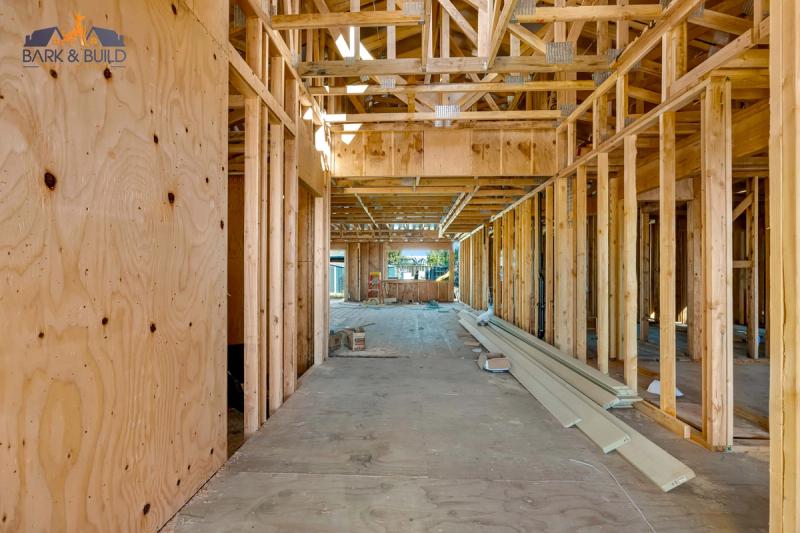
Structural Engineering
Engineering Open-Concept Kitchen Layouts
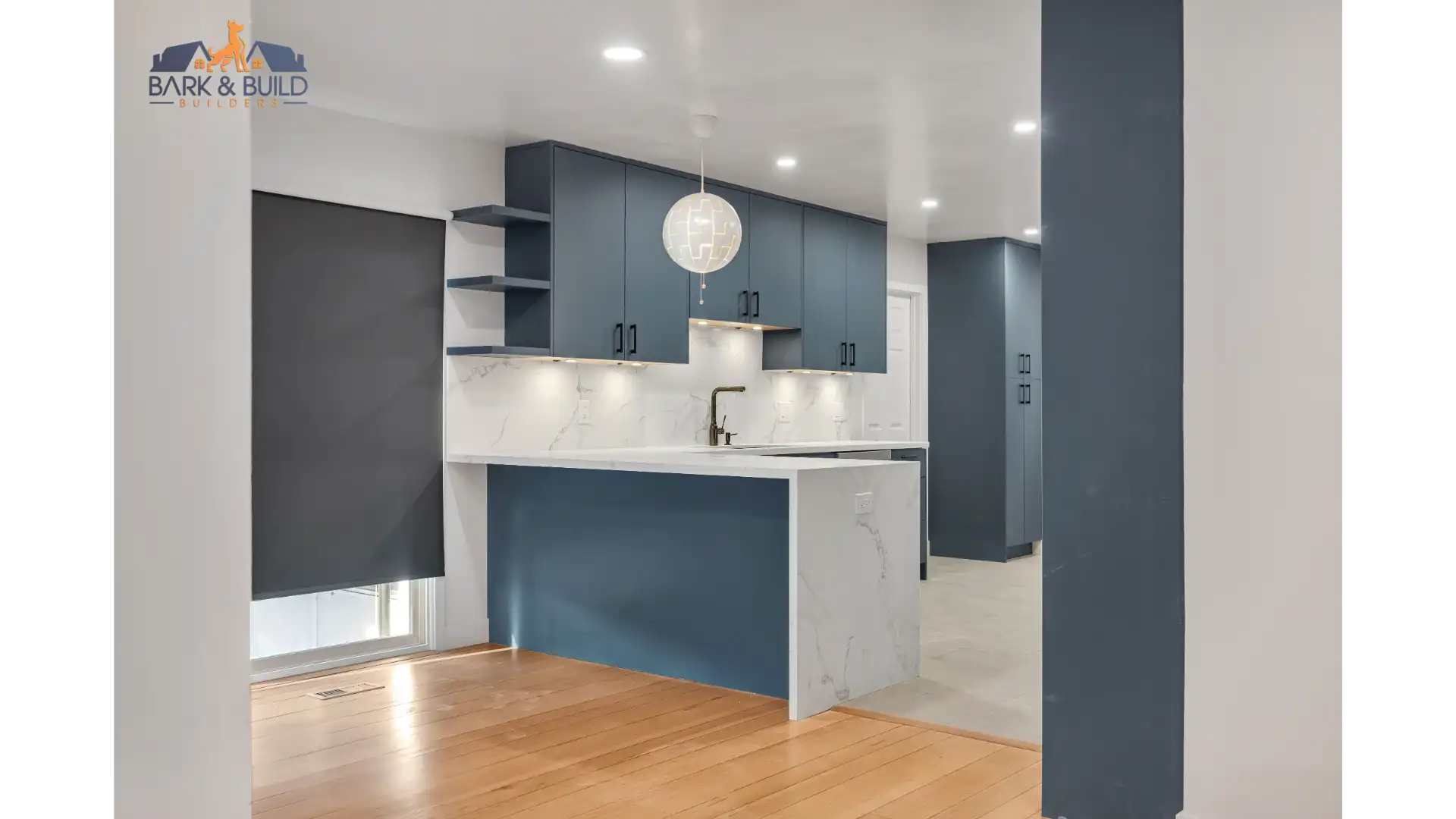
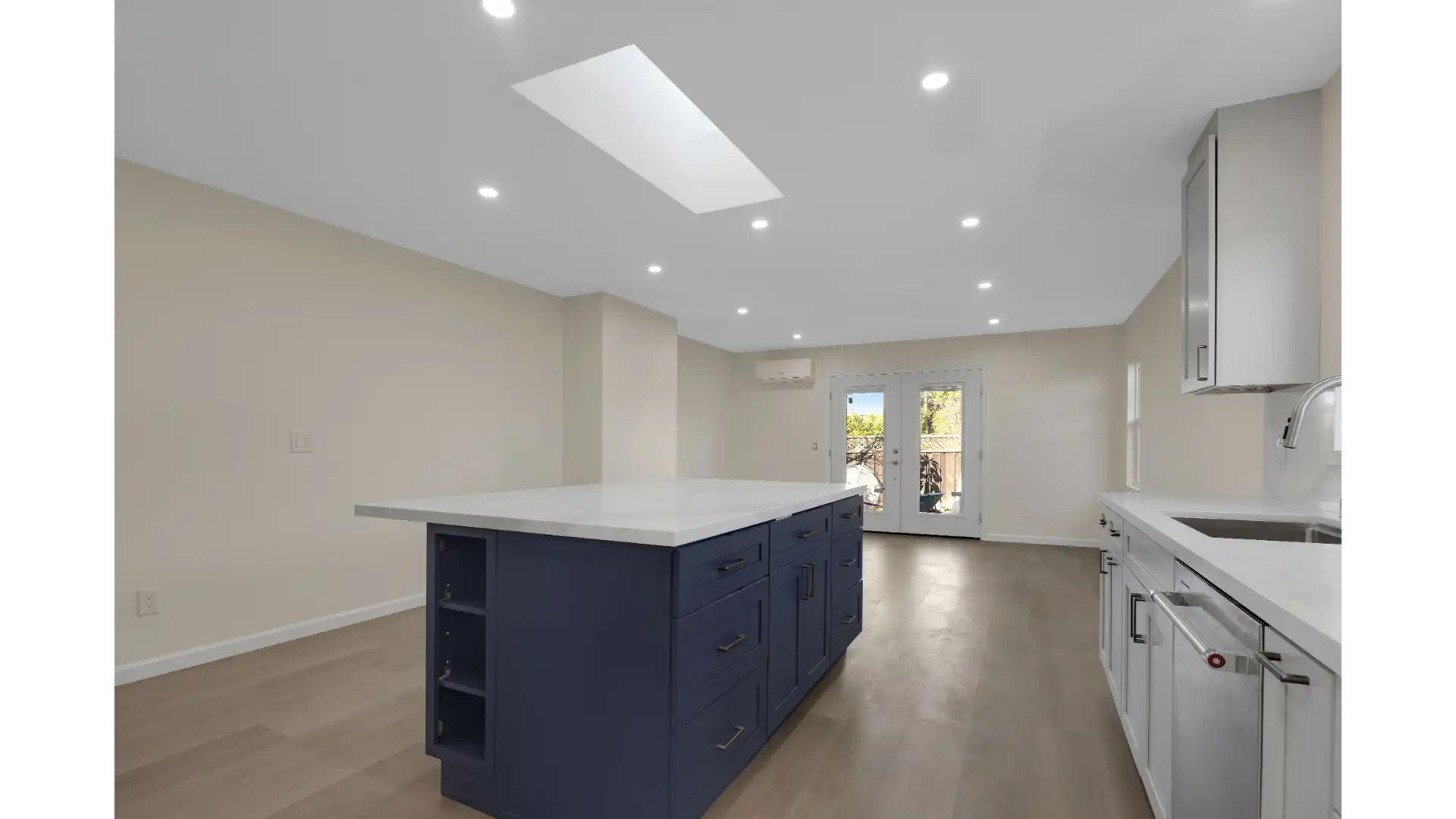
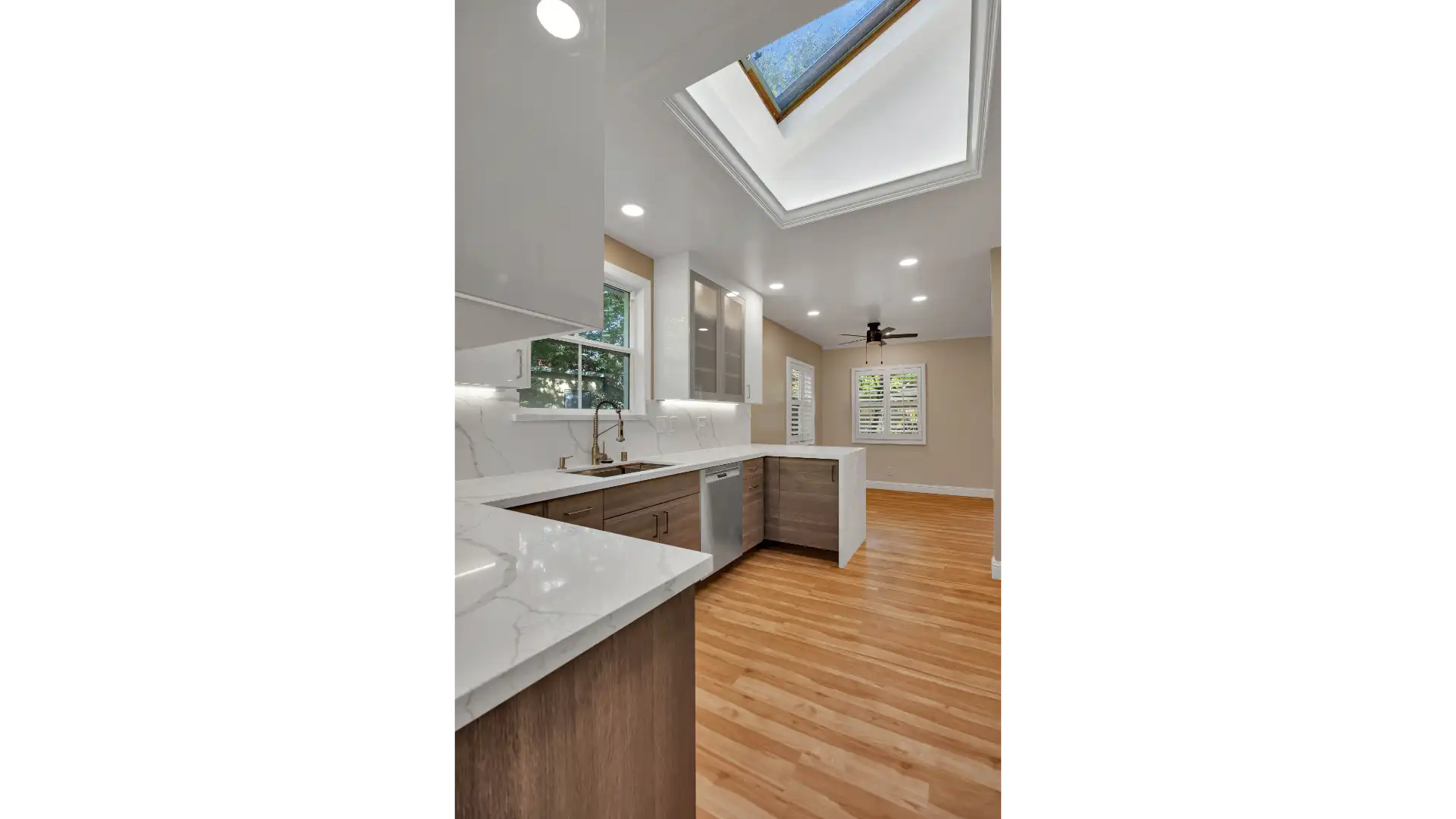
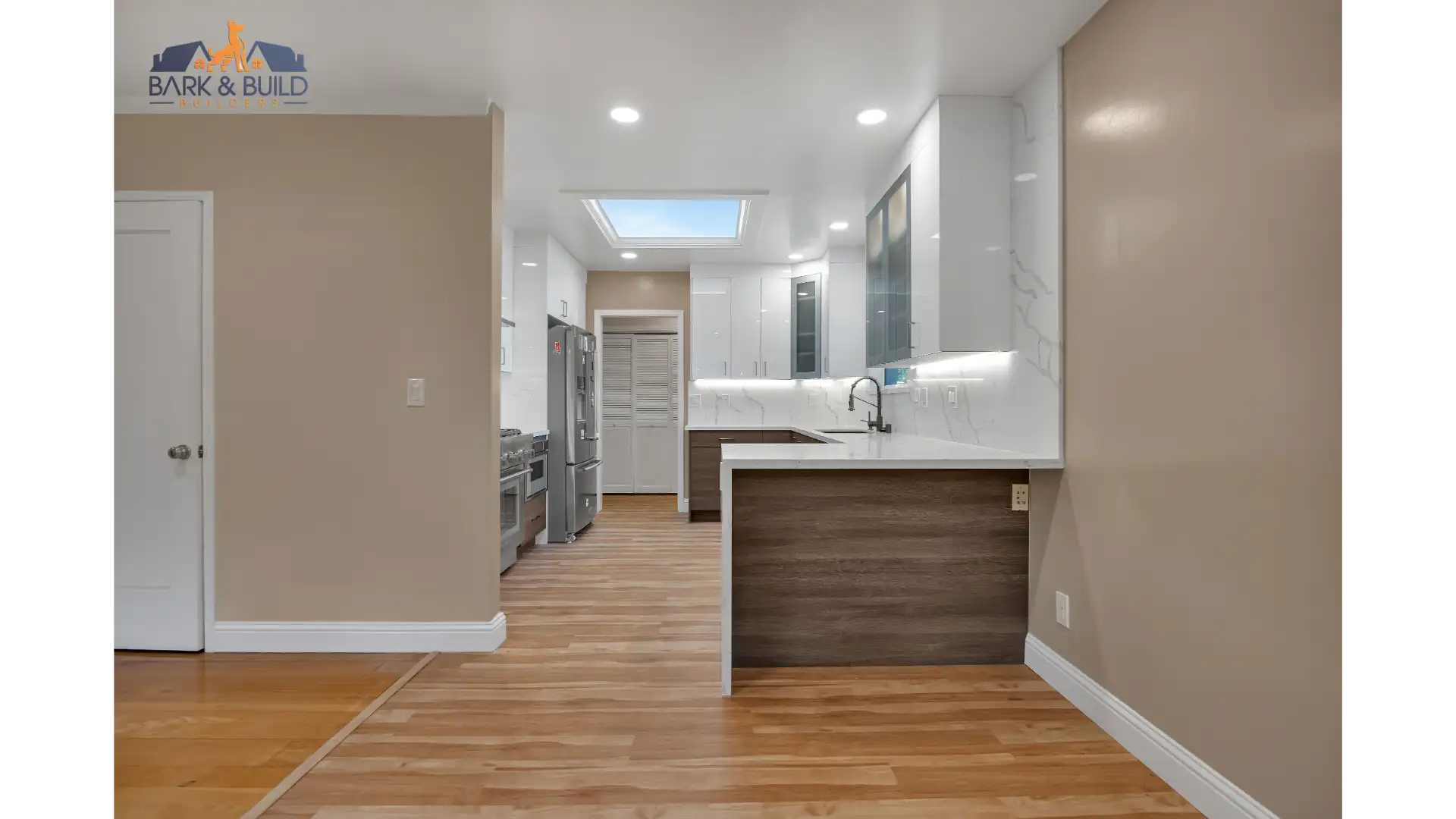
Homeowners frequently approach us wanting to escape the dark, isolated galleys typical of legacy architecture. Translating those two-dimensional architectural drawings into physical reality requires precision engineering to achieve a true open-concept flow. When you walk into a modernized culinary space, the immediate impact is a sense of spatial continuity. The physical barriers that previously blocked natural light from the living area are gone, replaced by expansive sightlines and functional work zones.
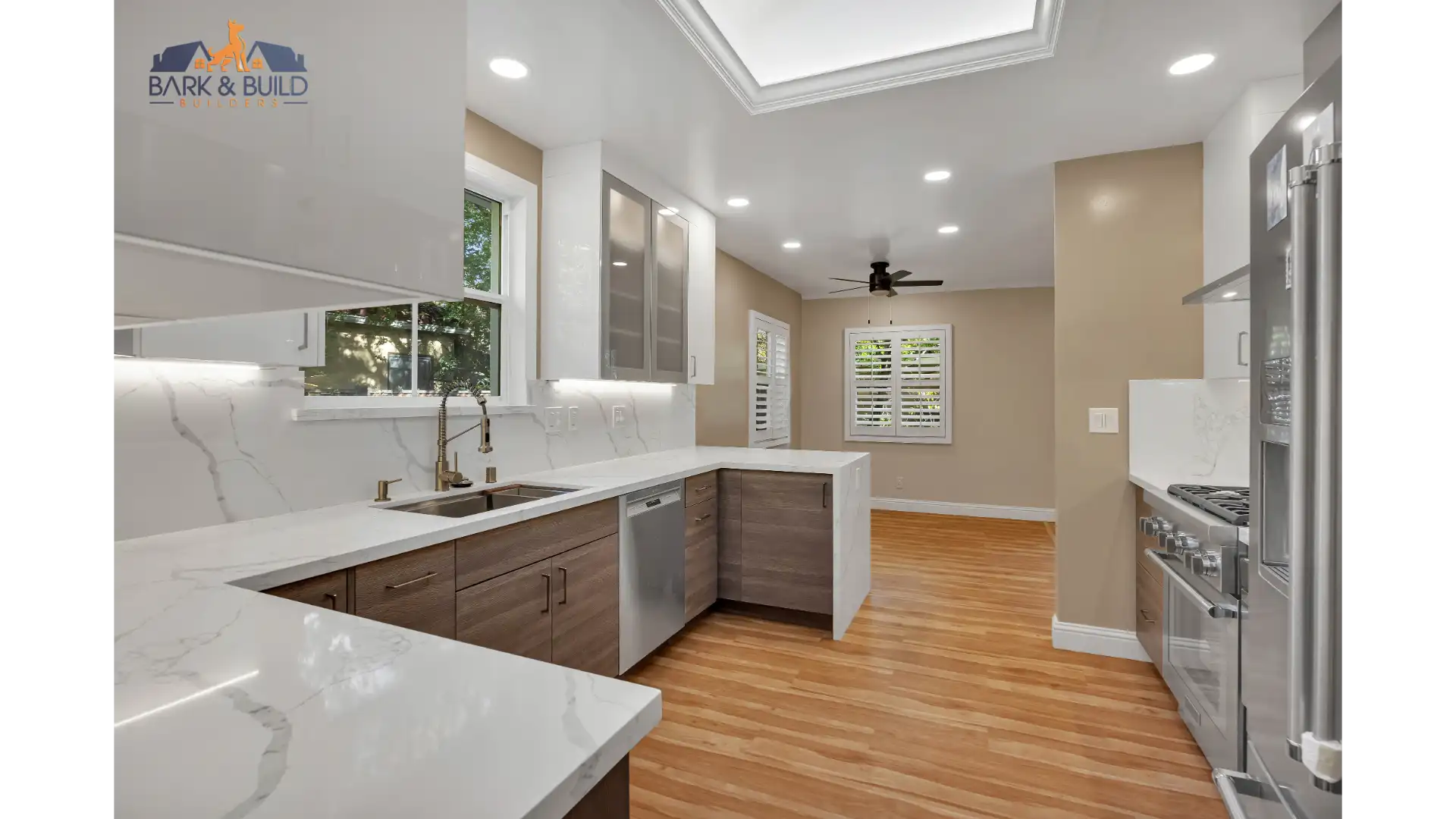
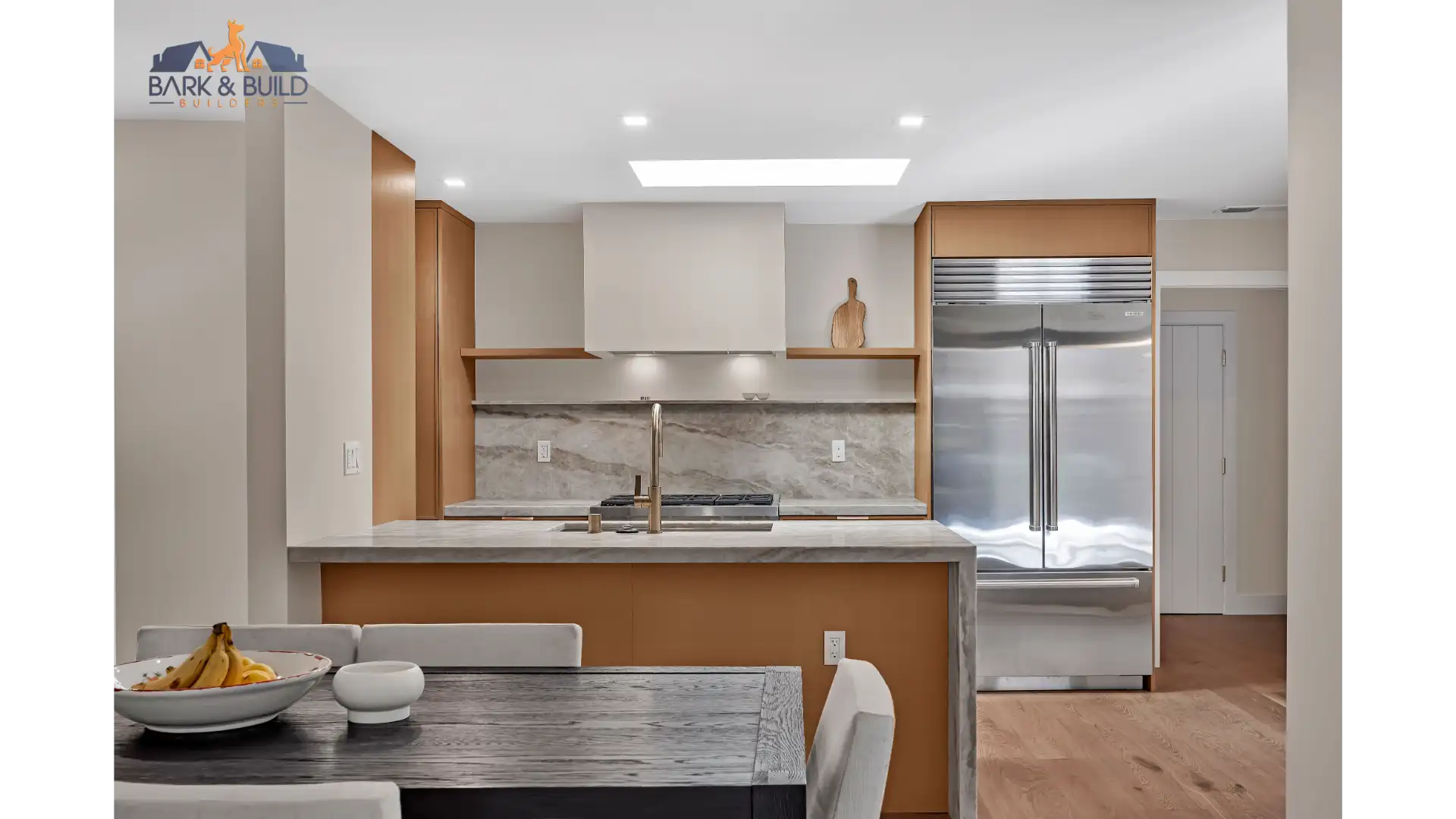
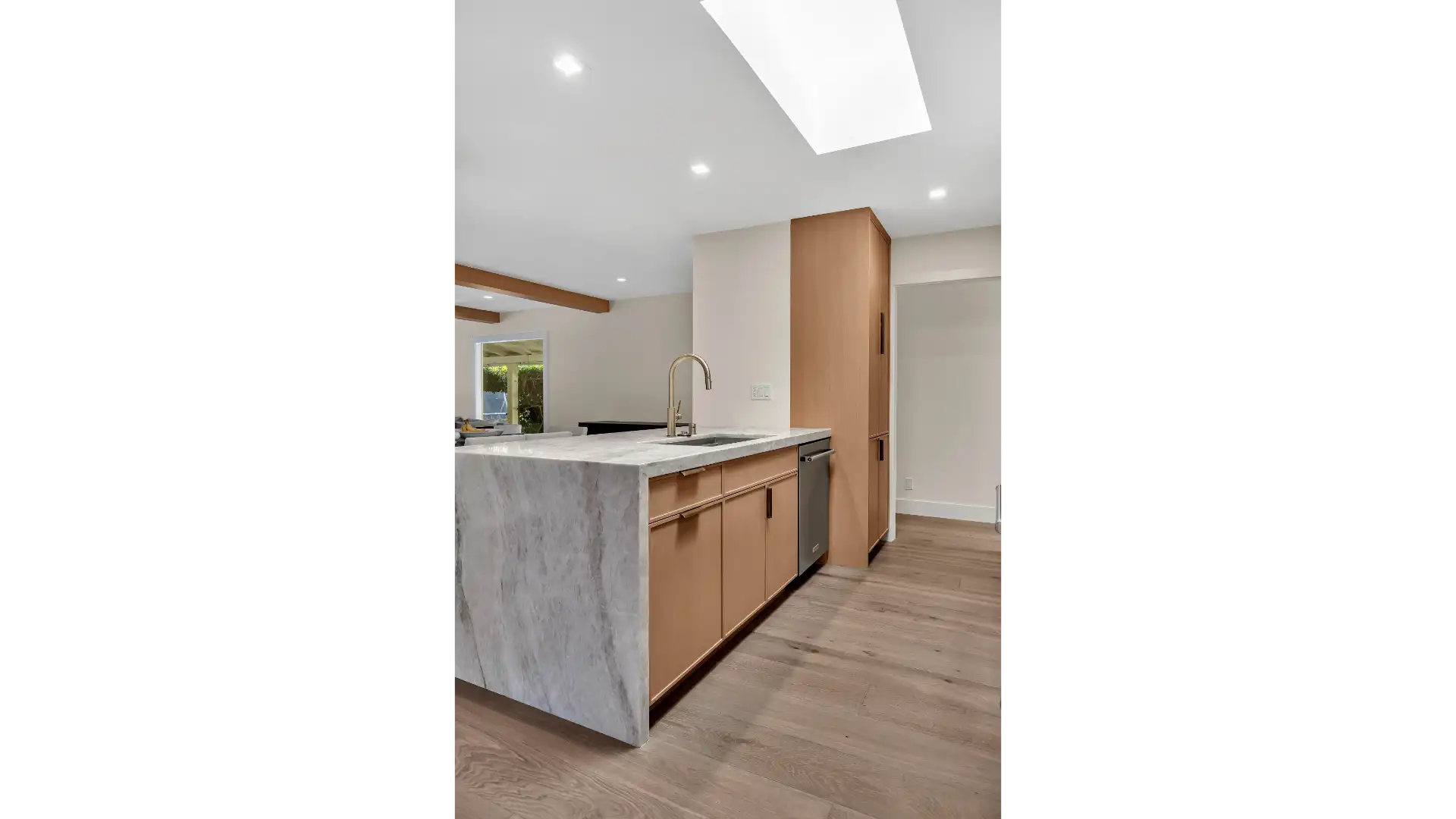
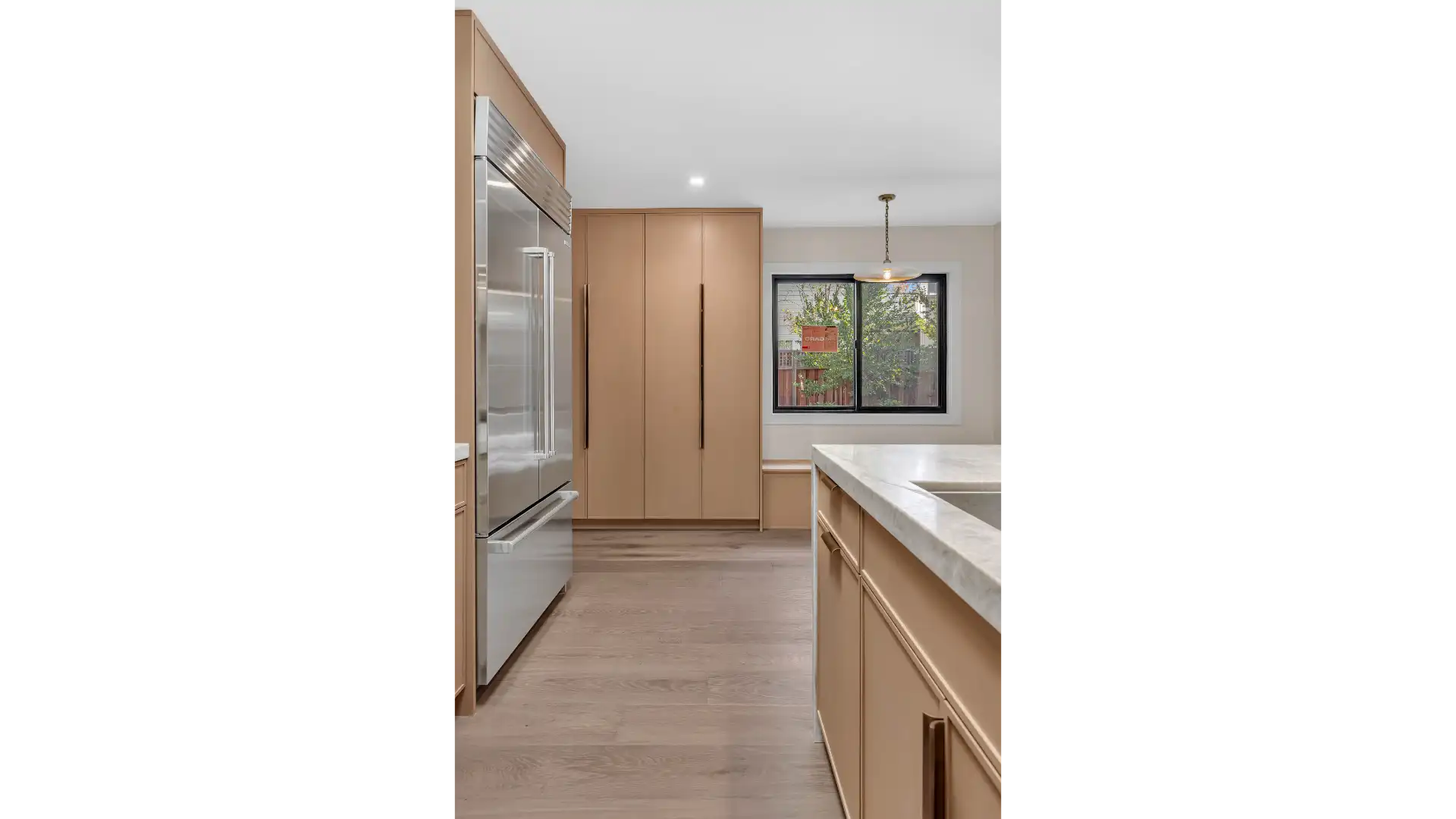
The tactile experience matters just as much as the visual layout. Running your hand across 3-centimeter thick quartzite countertops offers a tangible sense of durability and density that synthetic materials simply cannot replicate. We recess Sub-Zero integration directly into the wall framing, ensuring the refrigeration units sit perfectly flush with the surrounding casework rather than protruding awkwardly into the walking path. This level of exactness is what separates a functional room from an architectural centerpiece.
Energy Compliance
Integrating JA8 High-Efficacy Lighting
The visual atmosphere of an open floor plan relies heavily on proper illumination. To comply with local energy mandates while achieving the correct color temperature, we strictly specify JA8 high-efficacy lighting for all overhead and task applications.
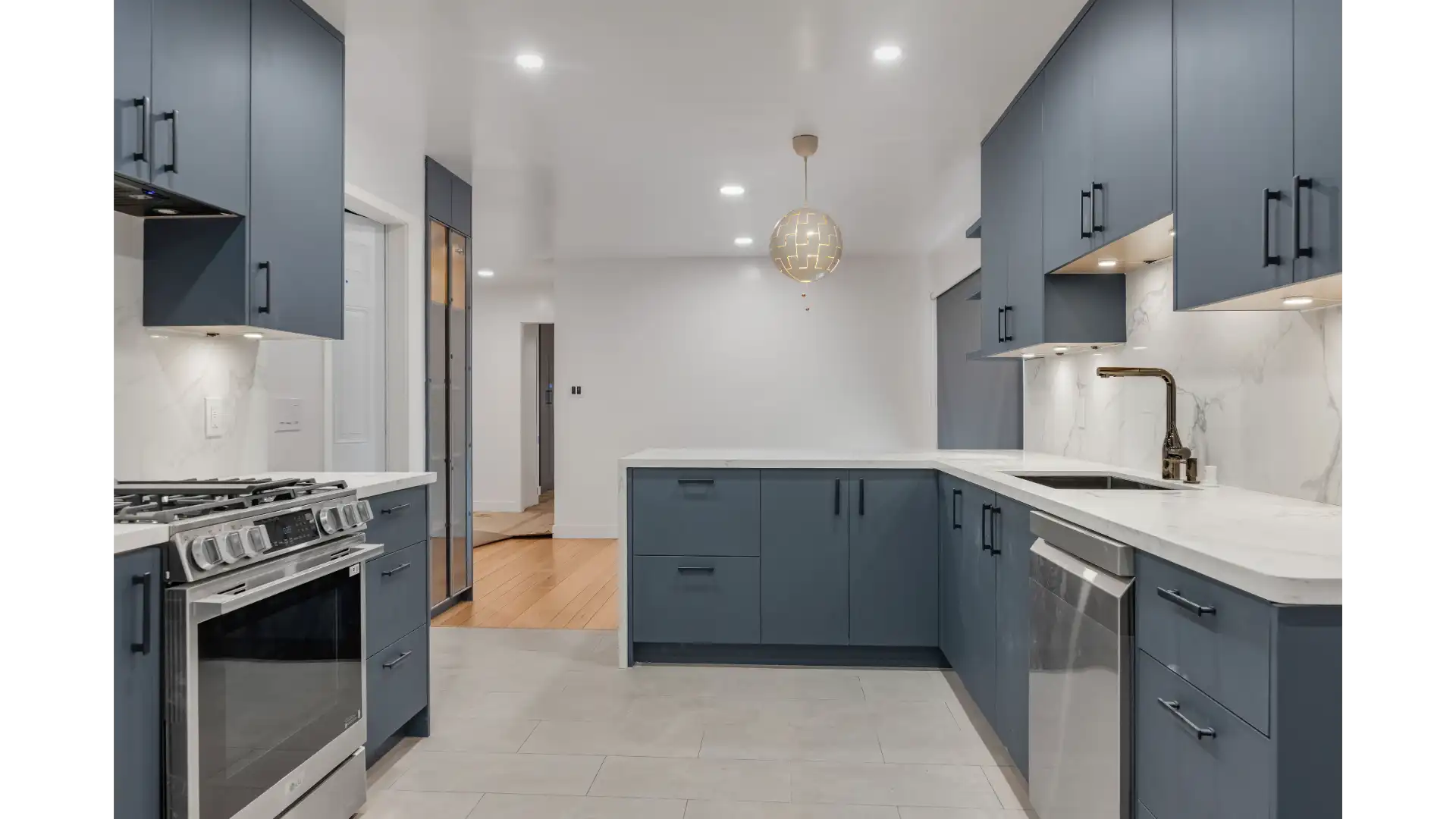
We utilize pin-based LED fixtures calibrated to 3000K or 3500K color temperatures with a Color Rendering Index (CRI) of 90 or higher. This guarantees that your food, cabinetry, and stonework are illuminated accurately without the harsh, sterile glare of outdated fluorescent bulbs. We eliminate screw-based sockets entirely from recessed downlights, ensuring your new lighting ecosystem passes municipal audits while delivering an inviting, highly controlled visual environment.
Budget Protection
Protecting Your Budget from the "Change Order" Trap
There is a pervasive and destructive practice in the local construction industry: intentional underbidding of projects. Fragmented contracting teams routinely submit artificially low initial estimates to win a job, deliberately ignoring the complex realities hidden behind the drywall. Once demolition concludes, these contractors halt production and hit the client with massive, unexpected change orders.
We refuse to operate this way. We invest heavily in the diagnostic phase, opening exploratory holes when necessary and deploying our in-house designers and engineers to evaluate the exact condition of your infrastructure. We establish a fixed, comprehensive scope of work that accounts for the hard realities of your specific property. By removing the guesswork from the bidding process, we provide an accurate financial roadmap that protects your capital from the very beginning.
The Transformation
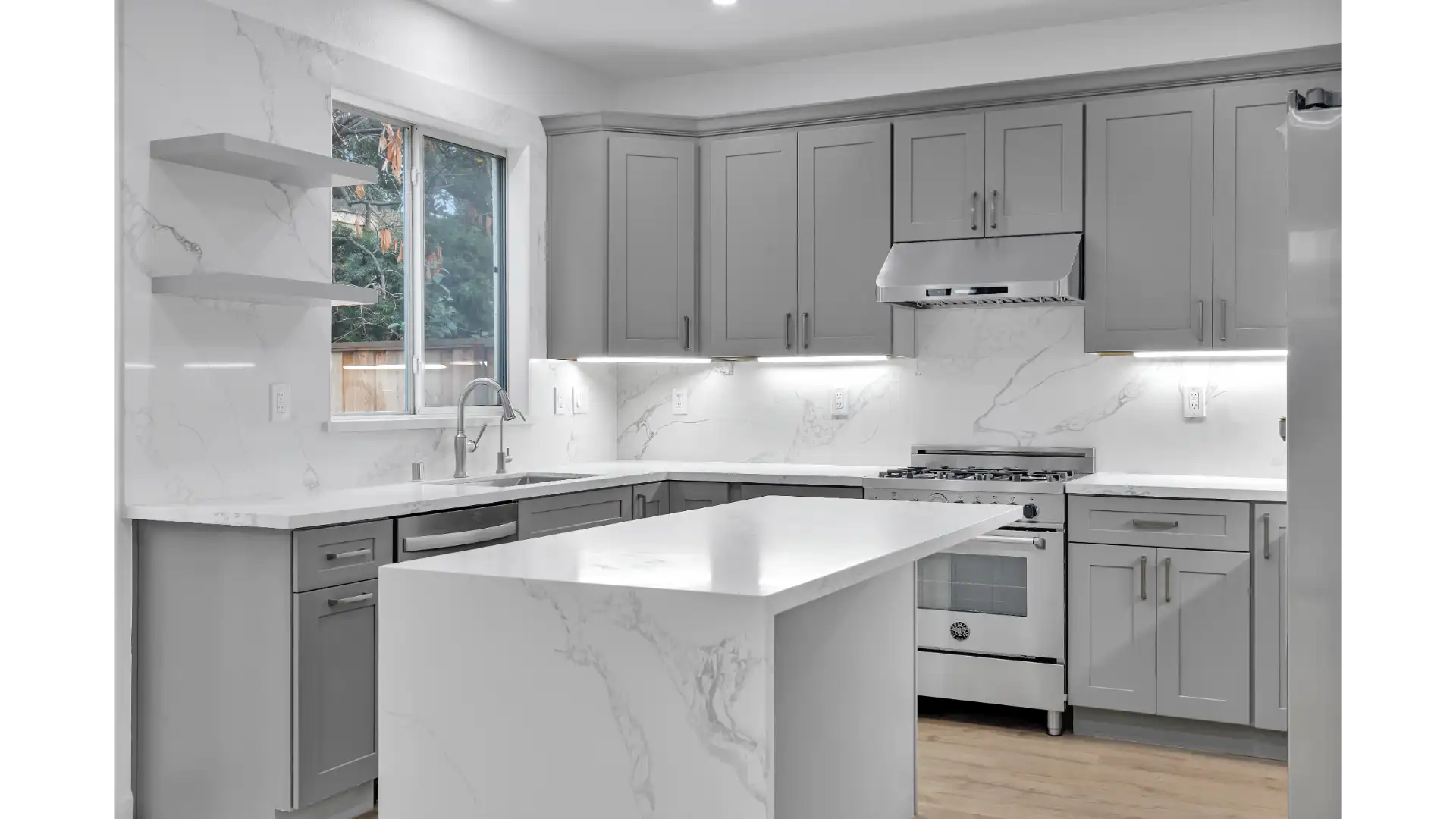
Before and After: Peninsula Kitchen Renovation
Before
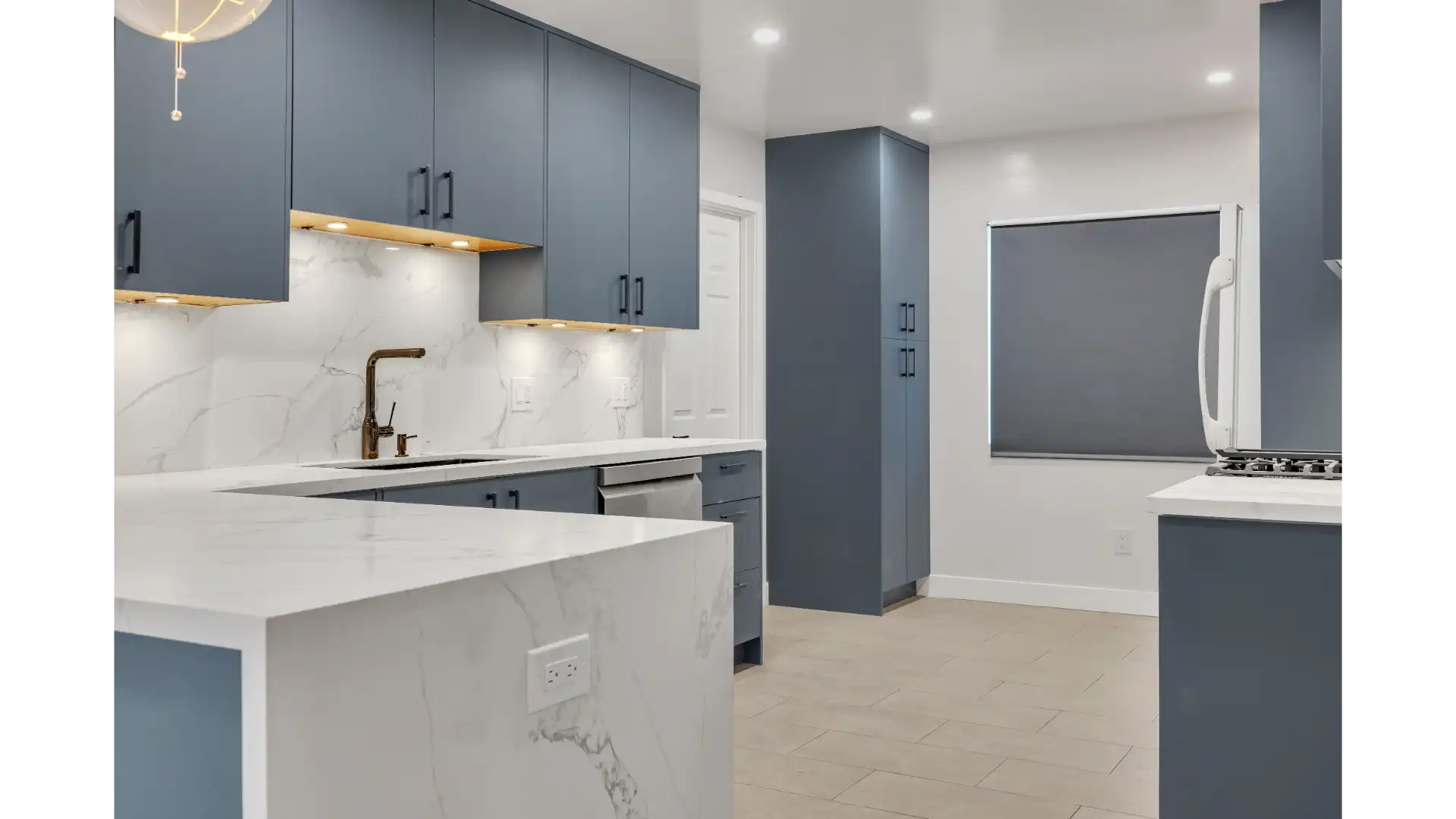
After
Structural Alterations
Safely Removing Load-Bearing Walls for Better Flow
A common objection we hear from homeowners is the belief that their home is too old or too compartmentalized to support modern sightlines. They assume that because a wall sits squarely in the middle of their desired footprint, their vision is structurally impossible. Even if your current layout features a massive, obstructive partition dividing the kitchen from the living room, we can engineer a clear path forward.
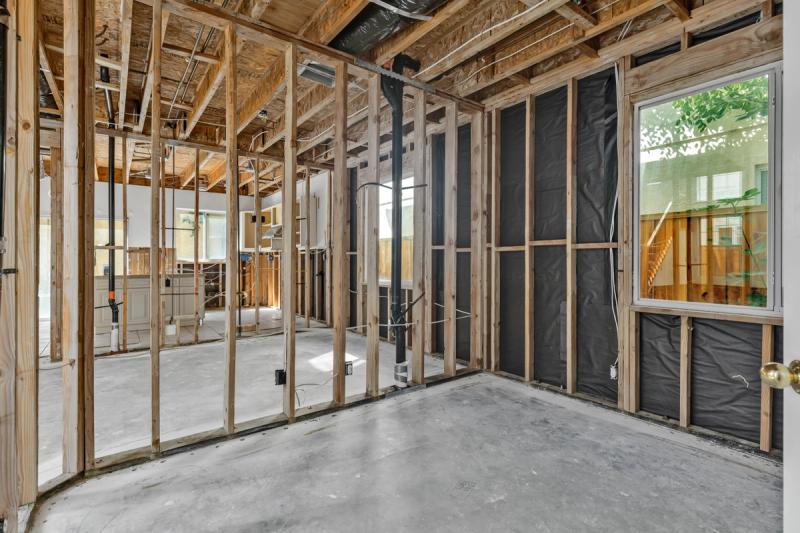
Those partitions are rarely just cosmetic; they carry the weight of the ceiling joists and roof structure down to the foundation. Removing them requires exact mathematical calculations, not guesswork. We routinely perform structural alterations in legacy homes that others deem too complex, safely transferring vertical loads to exterior walls or newly poured foundation footings.
Engineering Detail
Specifying the Right Load-Bearing Header
You cannot simply tear out studs and hope the ceiling holds. The process requires specifying and installing a precisely calculated load-bearing header to span the new opening. Depending on the span length and the roof's specific weight, we use custom-fabricated steel I-beams or Laminated Veneer Lumber (LVL) beams.
Our engineering team calculates the exact point loads and deflection tolerances required by the 2026 California Building Code. By installing the correct header, we safely carry the structural load across the span and distribute it down through engineered king and jack studs. This rigorous structural reinforcement ensures your home maintains absolute stability while delivering the wide-open, continuous floor plan you actually want.
Case Study — 1954 Woodside Plaza Home
Rewiring a 1950s Kitchen: Knob-and-Tube Discovery
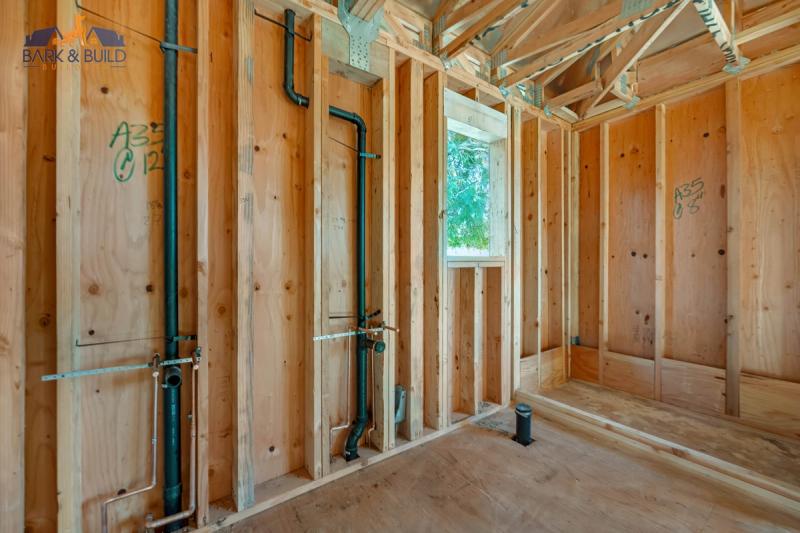
During initial demolition, we uncovered active knob-and-tube wiring buried under decades of blown-in cellulose insulation — a severe fire hazard hidden from the homeowners for years.
From the Field
The Hidden History Behind the Lath-and-Plaster Ceiling
I was recently walking a job site in the Woodside Plaza neighborhood during the initial demolition phase. The client wanted to expand their footprint and integrate heavy-duty, commercial-grade appliances into a 1954 home. As my crew pulled down the original lath-and-plaster ceiling, the home's hidden history revealed itself. We uncovered a massive web of active knob-and-tube wiring buried under decades of blown-in cellulose insulation.
The original contractor had simply tapped into this archaic, ungrounded system during a minor 1980s cosmetic update, creating a severe fire hazard that was completely hidden from the homeowners.
If we had been a basic labor crew rushing to hang drywall, that wiring would have been buried again, leaving the family at risk. Instead, I halted the framing crew and immediately brought in our electrical team. We mapped the entire circuit path back to the main panel. We completely extracted the brittle, cloth-covered wire and pulled new, properly gauged Romex conductors throughout the entire ceiling and wall cavity. We then updated the grounding system to meet current code requirements.
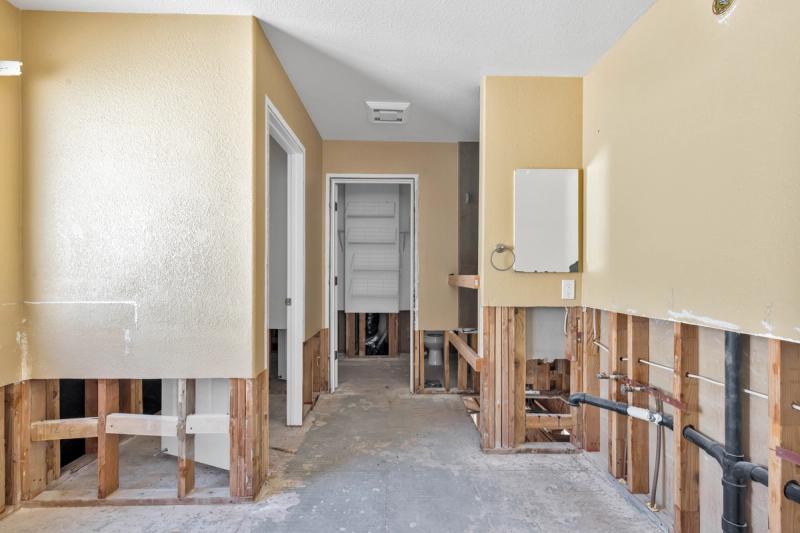
When the client came home that evening, I walked them through the exposed framing, showed them the extracted wiring, and explained exactly how we mitigated the hazard. That is the reality of construction in this region.
When the client came home that evening, I walked them through the exposed framing, showed them the extracted wiring, and explained exactly how we mitigated the hazard. That is the reality of construction in this region.Owner — Bark & Build Builders, CSLB #1119304
2026 Code Standards
Upgrading to 2026 California Electrical Code Standards
Operating a modern culinary space involves managing heavy electrical loads in close proximity to water sources. The updated 2026 California Electrical Code (CEC) forces contractors to over-engineer the electrical grid, eliminating the nuisance of tripping breakers when you try to run a toaster oven and an espresso machine at the same time.
By adhering strictly to these enhanced panel and circuit requirements, we future-proof your property against the expanding power demands of smart-home ecosystems and induction cooking technology. You aren't just passing an inspection; you are gaining a highly reliable, heavy-duty power infrastructure.
Safety Upgrades
Total GFCI Receptacle Coverage
The 2026 CEC Section 210.8 updates removed previous distance limitations regarding proximity to the sink. Now, absolute compliance requires that every single 125-volt-to-250-volt receptacle serving countertop surfaces must feature Ground-Fault Circuit Interrupter protection.
We install tamper-resistant, AFCI/GFCI dual-function devices across all work zones, islands, and peninsulas. This ensures that any electrical fault or water exposure instantly cuts power at the source, preventing shock hazards. We handle the exact spacing calculations, ensuring no point on the counter is more than 24 inches from a power source and guaranteeing your layout passes final municipal sign-off without a single correction notice.
Custom Cabinetry
Procuring and Installing Custom Kitchen Cabinetry
When budgeting for a major renovation, casework is often the largest single line item. There is a massive operational and financial difference between ordering prefabricated boxes from a big-box retailer and investing in true custom cabinetry. Prefabricated units are mass-produced using particleboard carcasses and standard incremental sizing, forcing the installer to use large, unsightly filler panels to cover dead space between the cabinet and your wall.
We bypass this compromised approach entirely. True custom casework is fabricated to the exact millimeter of your room's geometry, maximizing every available inch of storage. We utilize three-quarter-inch, furniture-grade plywood for box construction, paired with solid hardwood face frames and dovetail drawer boxes engineered to hold heavy cast-iron cookware without sagging.
Financial transparency requires us to be clear about lead times. Custom fabrication requires an eight to twelve-week production window from the moment the shop drawings are signed. We lock in these measurements and finalize the procurement phase before a single hammer swings on your property, preventing the dreaded scenario where your home sits torn apart for months while materials are delayed.
Historic Neighborhoods
Modernizing Historic Mount Carmel Kitchen Infrastructure
Renovating within the historic Mount Carmel district requires a highly specialized approach that balances aggressive modernization with strict architectural preservation. These heritage properties, characterized by their early-20th-century Craftsman and Spanish Colonial Revival details, were simply not engineered to accommodate 48-inch dual-fuel ranges or massive integrated refrigeration columns. Their floor joists are often undersized, and original plumbing lines were routed through complex, narrow chases.
Before bringing in heavy stone or professional-grade appliances, we assess the deflection rating of existing floor joists. We frequently sister new engineered lumber alongside the original century-old joists to stiffen the floor system, preventing your heavy natural stone island from causing the floor to sag. We carefully extract original wainscoting and casing, storing them safely so they can be reinstalled over the modernized drywall.
We route new, high-capacity gas lines and dedicated ventilation ducting through the legacy framing without compromising the exterior facade. This methodical engineering approach allows you to enjoy high-performance culinary technology while preserving the property's irreplaceable historical soul.
Pre-Construction
Mechanical, Electrical, and Plumbing Assessments
A successful build is won or lost during the planning phase, long before the demolition crew arrives. Our design-build methodology completely reverses the broken traditional dynamic through an exhaustive pre-construction infrastructure assessment. We map out all MEP variables while the walls are still closed.
We verify the exact location of the main waste stack, assess the routing for new makeup air ventilation, and calculate the total amperage draw of your proposed appliance package. By identifying exactly where the new infrastructure needs to travel, we lock in a fixed, accurate scope of work that protects your financial investment.
Project Management
Eliminating Subcontractor Scheduling Collisions
When electrical, plumbing, and HVAC trades operate as separate, competing entities, project timelines rapidly disintegrate. A plumber might cut through a joist right where the HVAC technician planned to run a rigid duct, resulting in days of arguing and costly rework.
We eliminate these subcontractor scheduling collisions through centralized project management. Because our engineering and design teams dictate the exact routing for every pipe, wire, and duct on the master blueprints, there is zero ambiguity on the job site. We sequence the rough-in phase so the plumbers, electricians, and mechanical installers move through the space in a coordinated, logical order.
Regulatory Compliance
Navigating Title 24 Energy Compliance in San Mateo County
California operates under some of the most aggressive energy and environmental regulations in the country, and San Mateo County enforces these mandates with absolute strictness. If a contractor ignores these rules during the planning phase, the homeowner is left with a red-tagged inspection notice, resulting in thousands of dollars in tear-outs and rework.
We take full, contractual responsibility for ensuring absolute Title 24 compliance across every facet of your build. Our in-house team generates the mandatory CF1R energy calculation reports required by the building division before the permit application is even submitted. We specify the correct R-value continuous insulation for exterior walls and ensure all new windows and doors meet the strict U-factor and Solar Heat Gain Coefficient (SHGC) maximums.
We guarantee the installation of high-performance plumbing fixtures with flow rates limited to 1.8 gallons per minute to meet local water-conservation audit requirements. By proactively engineering the space to exceed state mandates, we shield you from administrative gridlock, eliminate the threat of failed inspections, and deliver a highly efficient thermal envelope that actively reduces your long-term utility expenditures.
Lifestyle Design
Optimizing Kitchen Workflows for Busy Professionals
Life on the Peninsula operates at an intense pace. For busy professionals commuting up and down the 101 or taking Caltrain into the city, the home must function as a highly efficient machine. A poorly designed layout creates friction during the most critical times of the day — the morning rush and the evening decompression.
We calibrate our architectural layouts to support the specific workflow of the commuter lifestyle. We design dedicated drop zones for bags and devices, integrate rapid-boil induction technology for fast meal prep, and engineer the walking paths so multiple people can navigate the space simultaneously without colliding.
Electrical Calibration
Dedicated 20-Amp Small Appliance Circuits
Morning efficiency relies heavily on high-draw countertop appliances working flawlessly. Coffee makers, high-speed blenders, and toaster ovens require substantial power. To prevent the frustrating scenario of tripping a breaker while trying to get out the door, we install multiple dedicated 20-amp small appliance circuits.
We isolate these heavy-duty circuits from the general lighting and major appliance grids, ensuring your countertop stations have an uninterrupted, high-capacity power supply. We specifically map the outlet locations to match where you actually prep your morning meals, integrating power directly into appliance garages or concealed pop-up receptacles.
Our Methodology
How Our Design-Build Methodology Protects Your Investment
The traditional "design-bid-build" process is fundamentally flawed. A homeowner pays an independent architect for a concept, only to discover months later that the separate general contractor cannot physically build it within the specified budget. The resulting chaos leads to compromised materials, slashed scopes of work, and tens of thousands of dollars wasted on architectural revisions.
We protect your capital by operating as a unified design-build team. Because our architectural designers, structural engineers, and site managers operate under the exact same roof, we maintain total financial accountability from the initial sketch to the final municipal walkthrough. We engineer the budget concurrently with the design. If a specific structural alteration or material choice exceeds your financial parameters, our estimators flag it immediately, allowing us to pivot to a viable alternative before any materials are ordered.
This single-source responsibility completely eliminates the toxic finger-pointing between independent trades. We hold the contract, we manage the procurement logistics, and we execute the labor. By controlling the entire renovation lifecycle, we drastically compress the timeline, eliminate costly rework, and ensure every dollar you invest translates directly into tangible equity in your property.
Investment
Kitchen Remodeling Cost Ranges in San Mateo County
Cosmetic Refresh
$30K – $50K
Cabinet refacing, new countertops, updated hardware, fresh paint, lighting upgrade, new sink and faucet. Existing layout preserved. Ideal for resale preparation or a targeted update.
Mid-Range Remodel
$50K – $100K
New semi-custom cabinets, quartz or granite countertops, tile backsplash, new flooring, appliance upgrades, lighting plan, minor layout adjustments. May include island addition.
Comprehensive Renovation
$90K – $180K+
Custom cabinetry, quartzite or premium stone, structural wall removal with LVL beam, professional-grade appliances, 200-amp panel upgrade, full MEP overhaul. Complete architectural redesign.
Bay Area labor rates ($80–$150/hr for general contractors, $150–$250/hr for plumbers and electricians) drive San Mateo County costs 20–40% above national averages.
Construction Phases
4–8 Weeks of Active Construction, Sequenced for Zero Rework
Pre-Construction: 8–12 Weeks
Design, Procurement & Permitting
In-house design finalization. Custom cabinetry and Sub-Zero units ordered (8–12 week lead time). CF1R energy reports generated. Permits submitted to local building division. MEP routing blueprinted to eliminate subcontractor collisions.
Weeks 1–3
Demolition, Structural & Rough-In
Dust barriers and HEPA air scrubbers deployed. Demolition of existing kitchen. Load-bearing header installation. Galvanized plumbing replaced. Panel upgraded to 200-amp. Rough plumbing, electrical, and HVAC sequenced through open framing.
Weeks 4–8
Cabinetry, Stone, Finishes & Inspection
Drywall hung and finished. Custom cabinetry installed to millimeter tolerances. Quartzite countertops templated and set. Backsplash tiled. JA8 lighting installed. Appliances connected. GFCI receptacles tested. Title 24 verified. Final walkthrough.
Local Operations
Local Kitchen Remodeling Across the Peninsula
Execution speed and logistical precision require proximity. Operating centrally near the Redwood City Transit Center and Courthouse Square, our dispatch hub is perfectly positioned to serve the diverse neighborhoods across the city and the broader Peninsula.
Whether we are navigating the tight, historic avenues of the Mount Carmel district, staging heavy equipment in the sloped terrains ascending toward Emerald Hills, or coordinating concrete deliveries near the bustling Broadway corridor, our teams are intimately familiar with the specific access and staging constraints of this city.
We handle the complex logistics of acquiring street parking permits for dumpsters and ensuring compliance with the noise ordinance so your neighbors remain undisturbed. By anchoring our operational headquarters right here in the heart of Redwood City, we maintain relentless daily oversight of our active builds.

Meet the Bark and Build Team
Our in-house crew of project managers, framing specialists, electricians, and finish carpenters operates as a single, coordinated unit. We limit our project intake to maintain daily on-site presence and relentless quality control on every active build. CSLB License #1119304 — fully bonded and insured.
Material Specifications
Engineered for Decades of Heavy Use
Structural & Cabinetry
LVL Beams: Custom-fabricated steel I-beams or Laminated Veneer Lumber sized to exact span table calculations for your specific roof load and deflection tolerances per 2026 California Building Code.
Cabinetry: Three-quarter-inch furniture-grade plywood carcasses with solid hardwood face frames. Dovetail drawer boxes engineered for 100-pound dynamic loads. No particleboard. No MDF boxes.
Countertops: 3cm quartzite (7 on the Mohs hardness scale) or premium engineered quartz. Templated after cabinet installation for sub-millimeter fit.
Mechanical & Electrical
Plumbing: Full galvanized-to-PEX replacement. High-performance fixtures limited to 1.8 GPM flow rates per Title 24 water conservation mandates.
Electrical: 200-amp or 320-amp panel upgrades. Dedicated 20-amp small appliance circuits. AFCI/GFCI dual-function tamper-resistant receptacles across all countertop zones. JA8 pin-based LED fixtures at 3000K–3500K, CRI 90+.
Appliance Integration: Sub-Zero flush-mount refrigeration. Induction cooktop with dedicated 40-amp circuit. Professional-grade ventilation routed through rigid galvanized steel ducting to exterior termination per California Mechanical Code.
Our Work
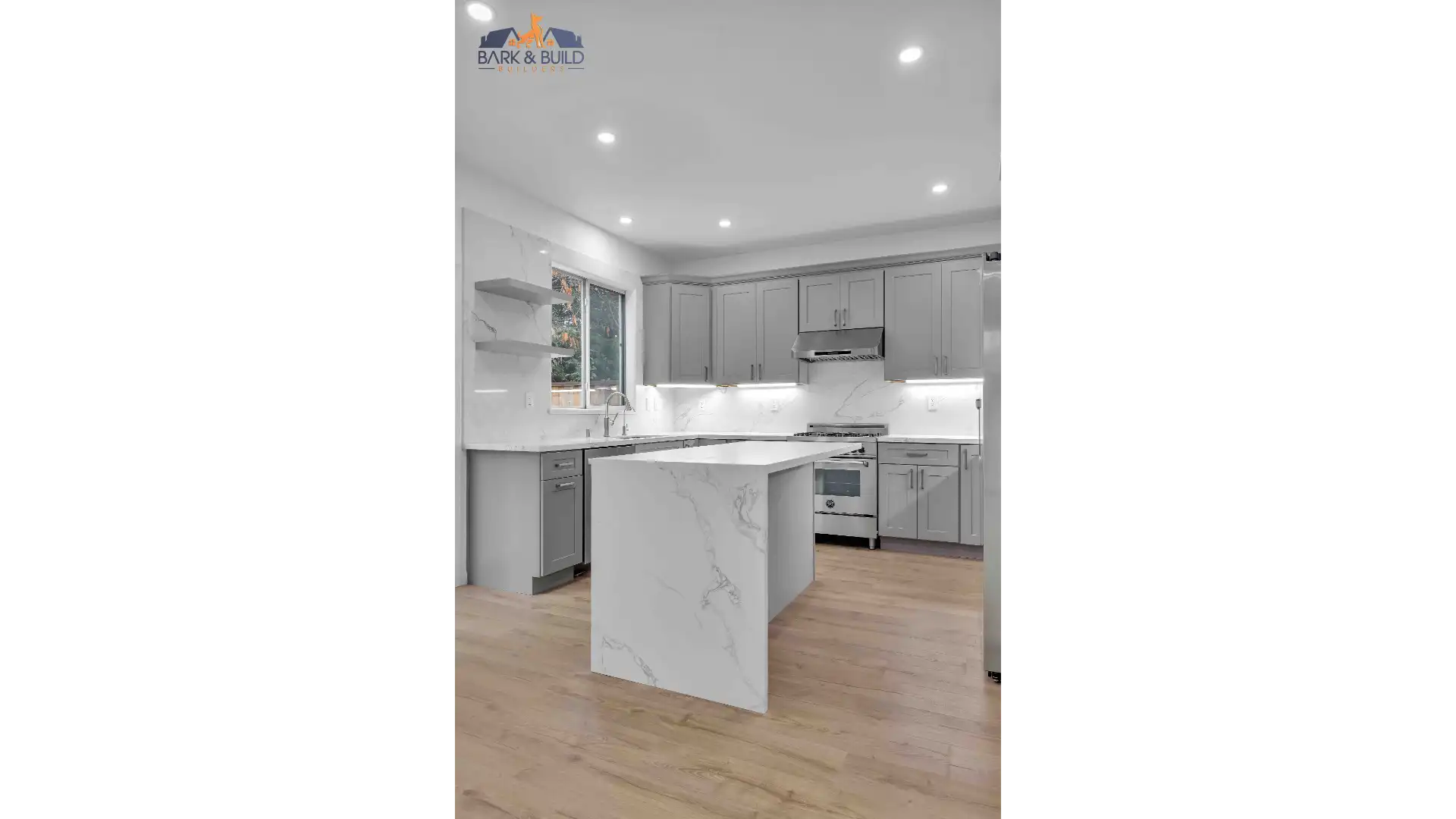
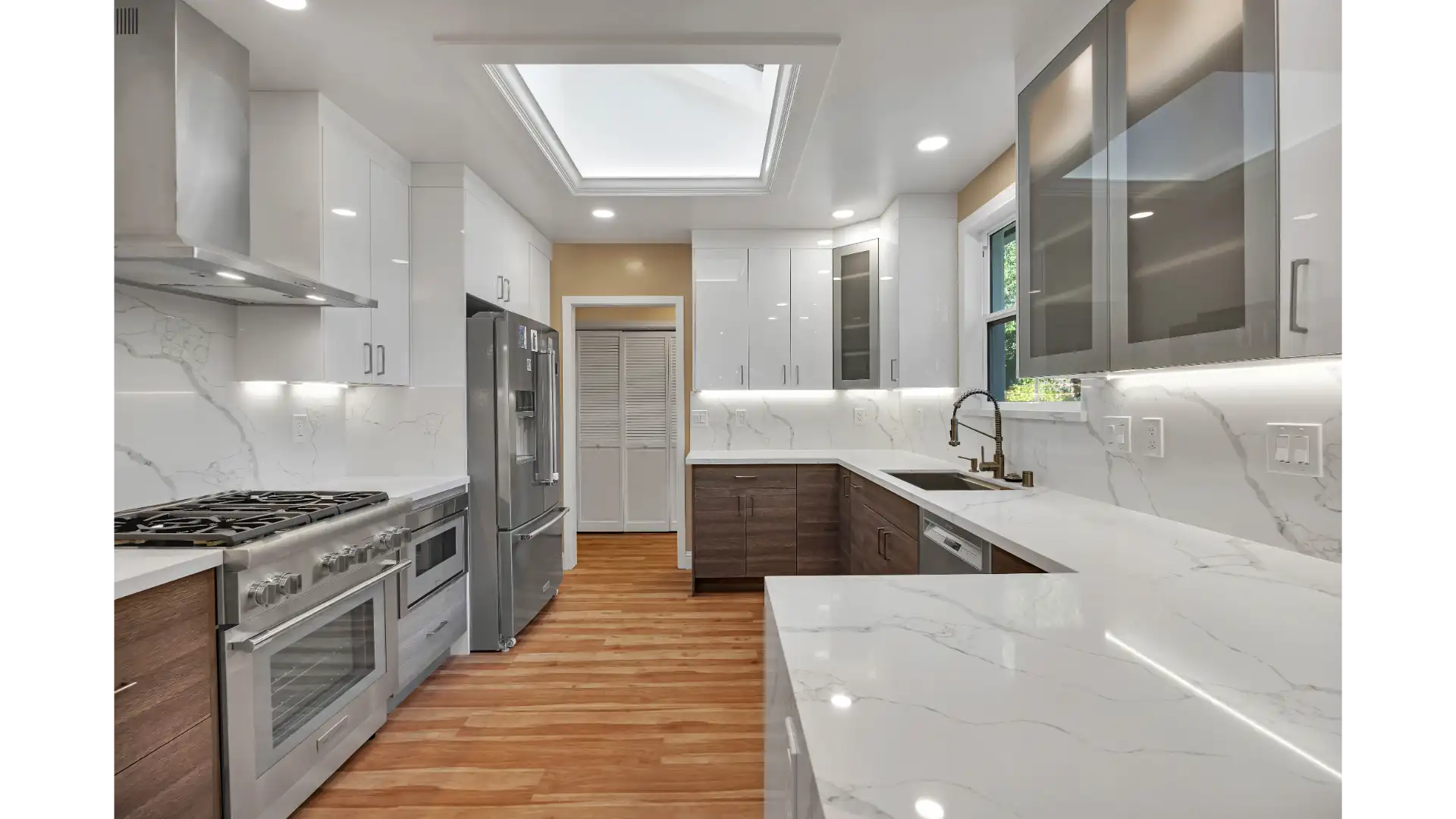
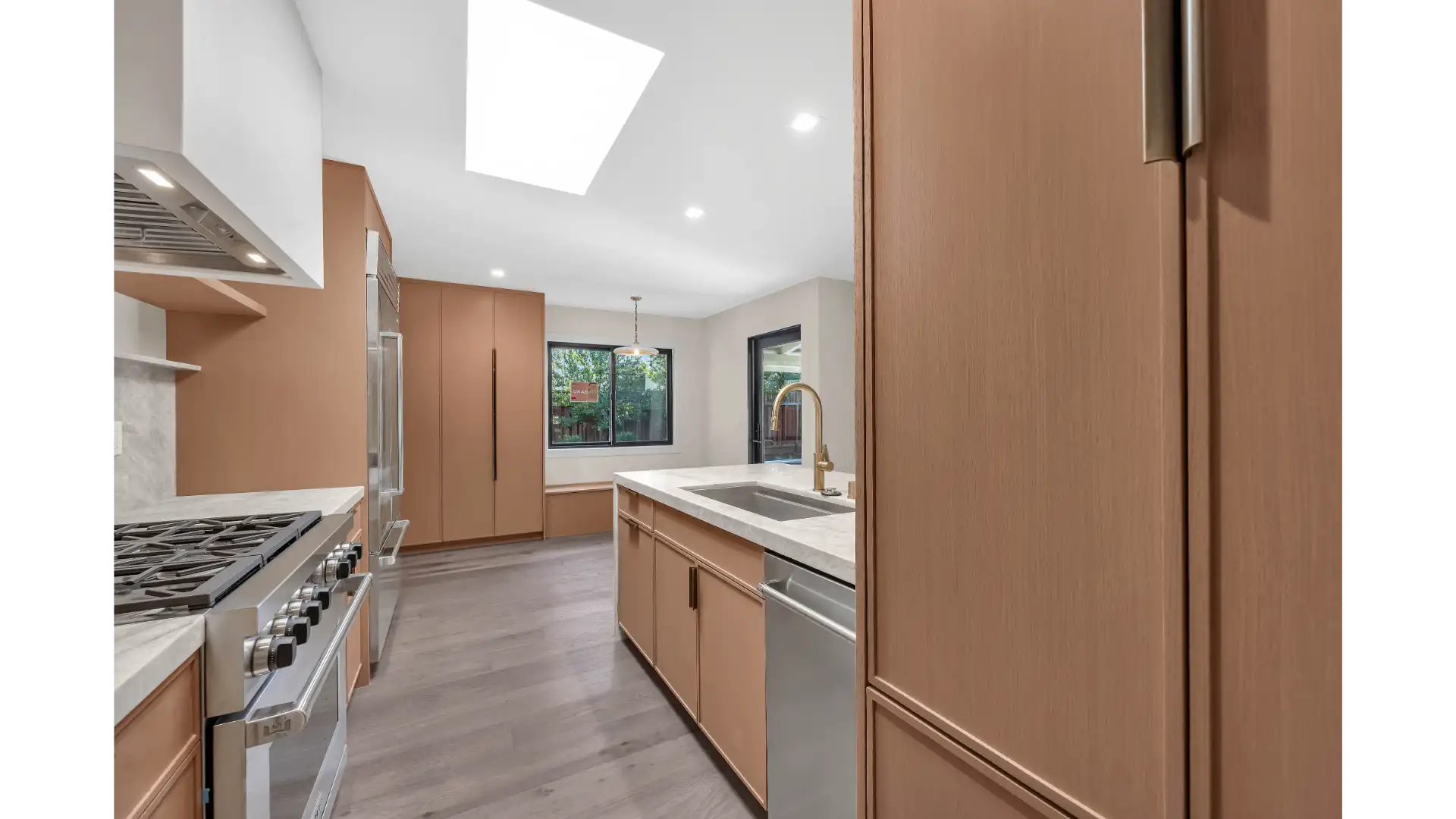
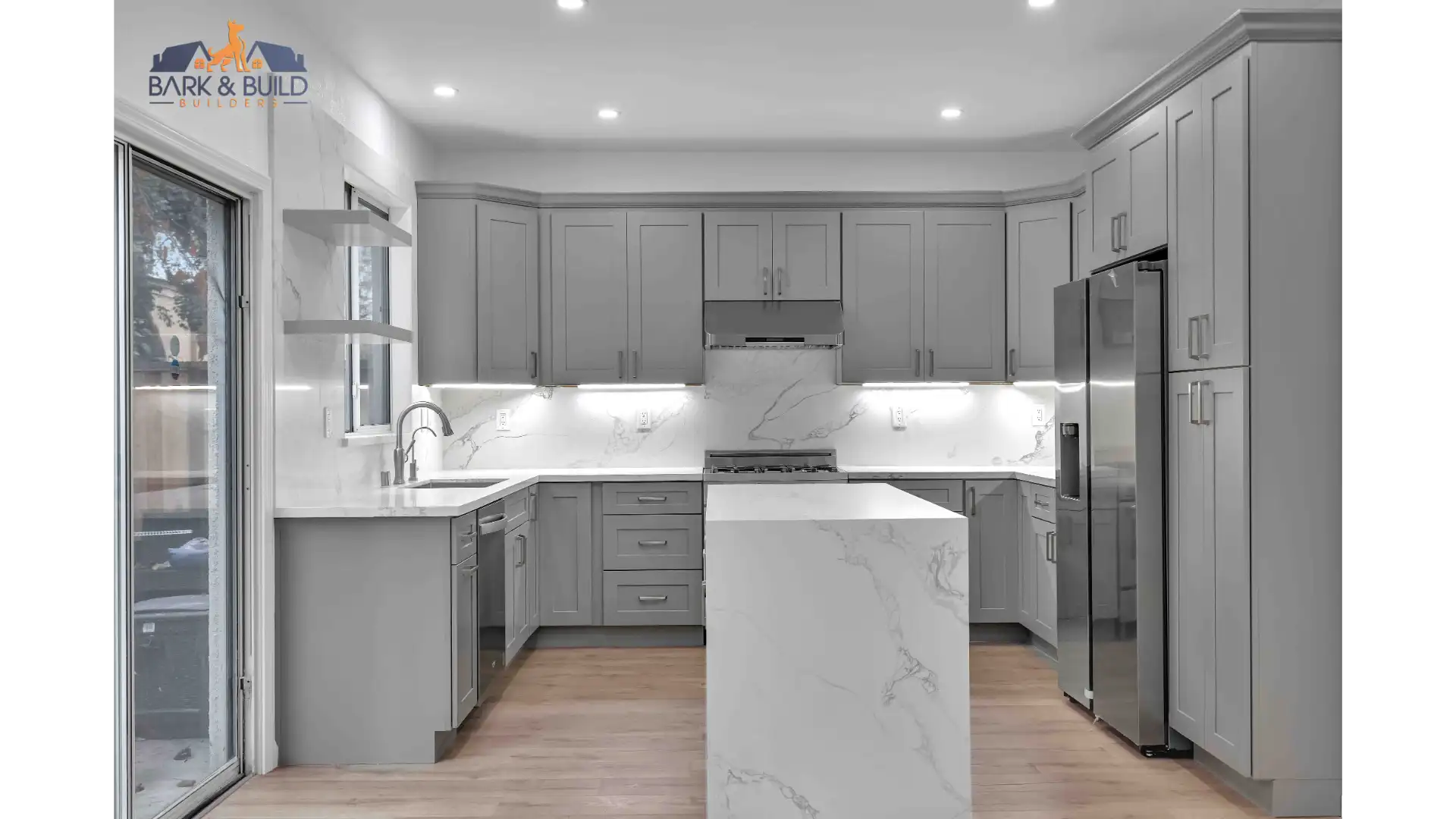
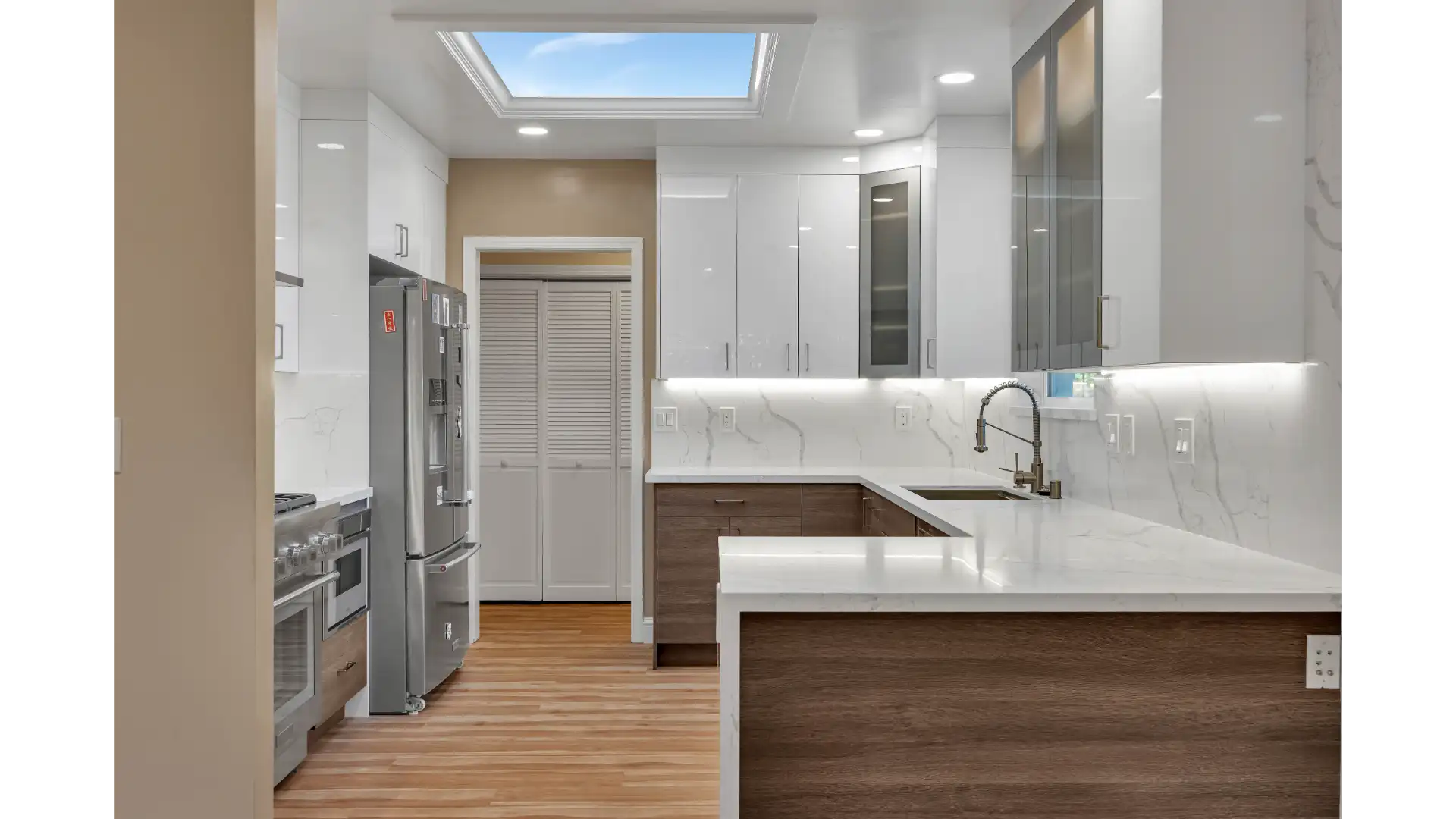
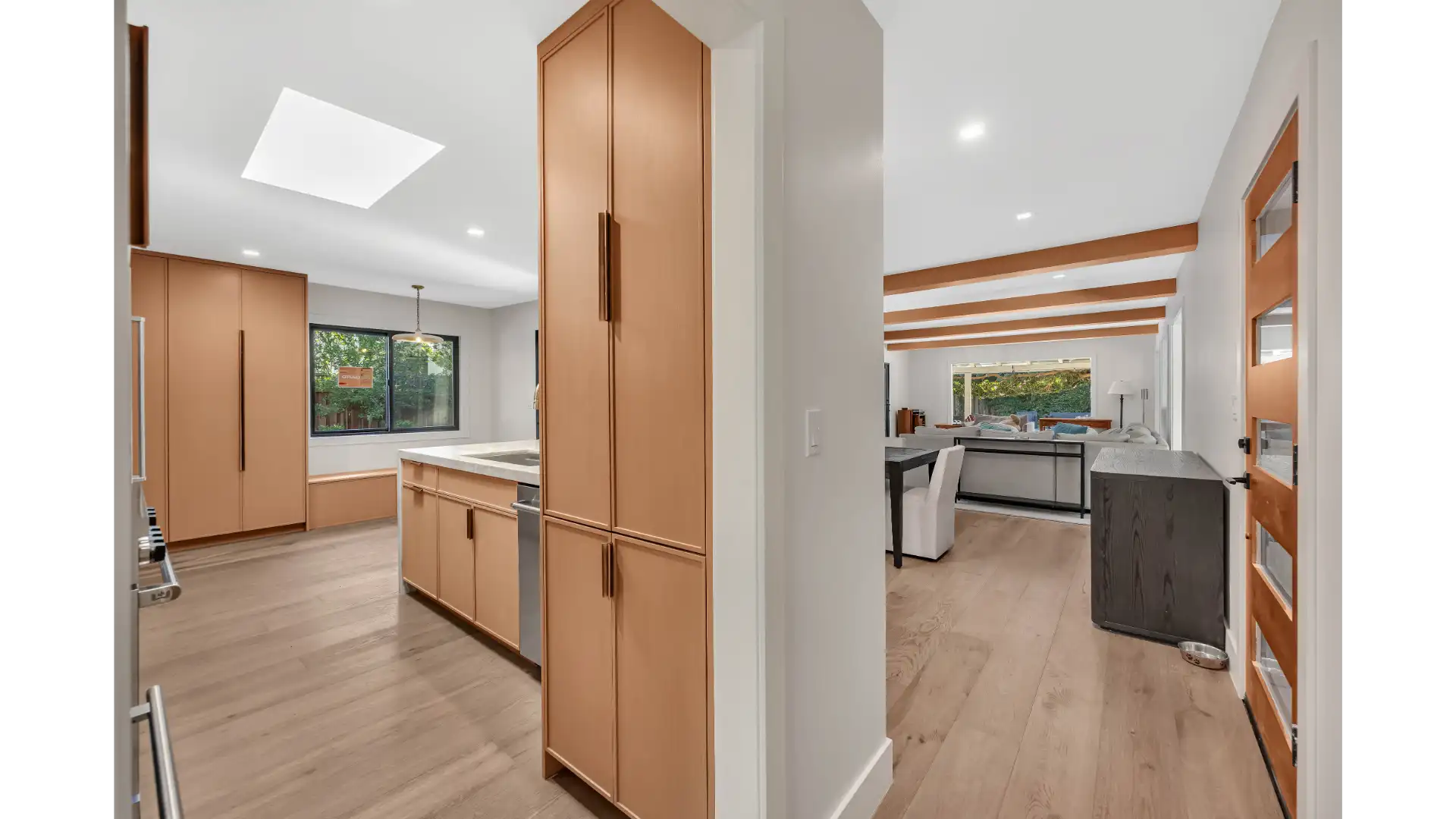
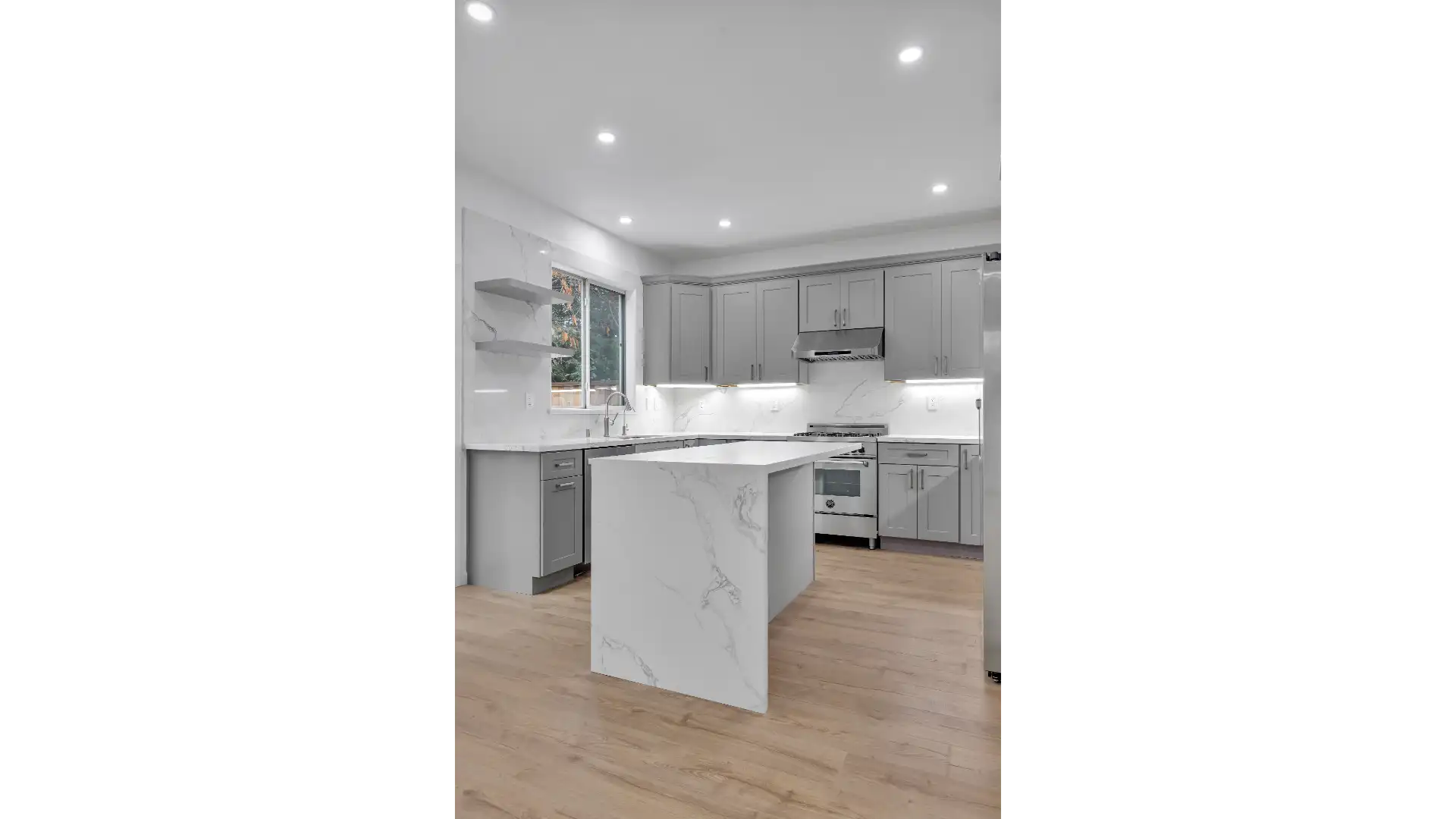
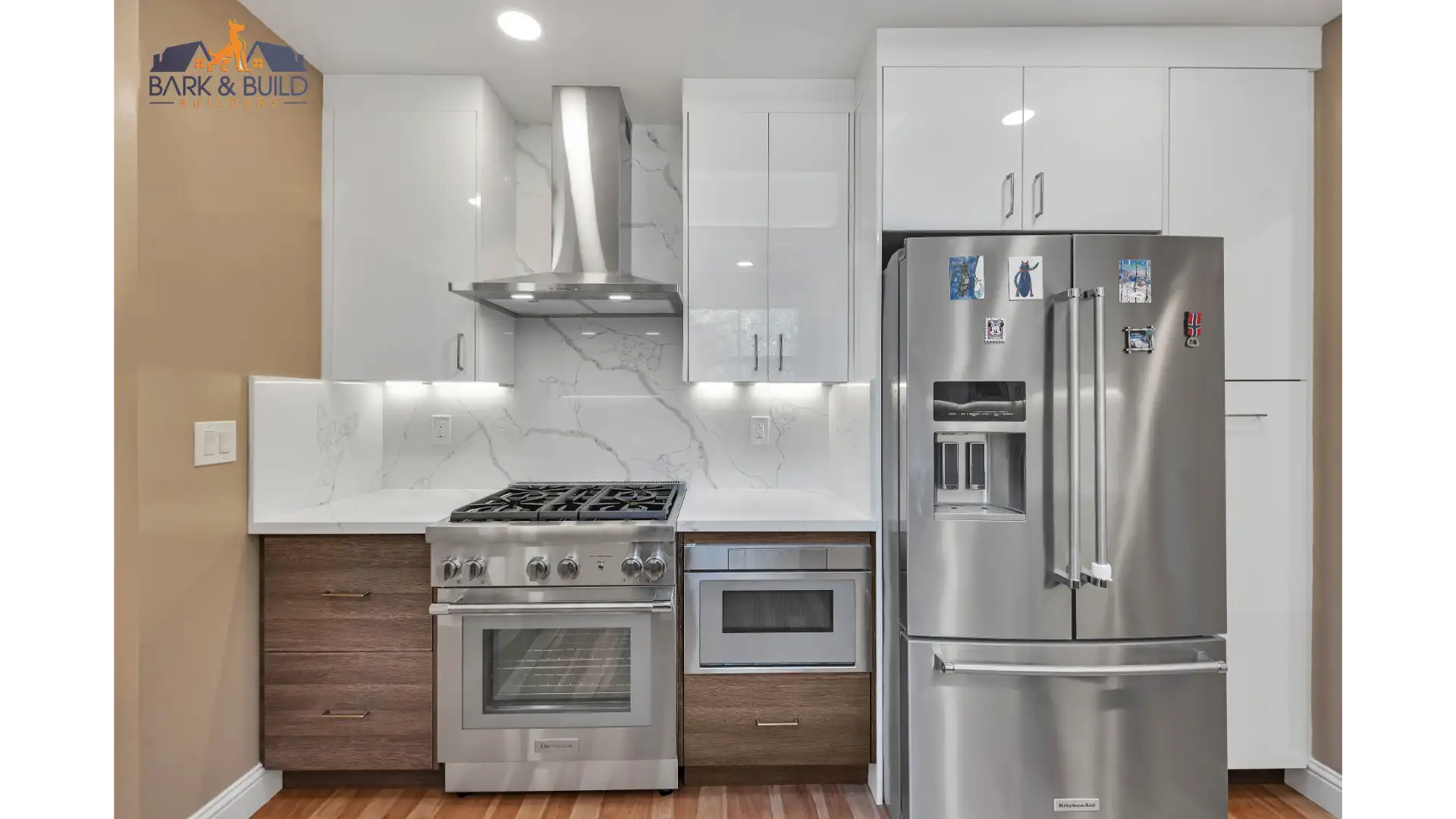
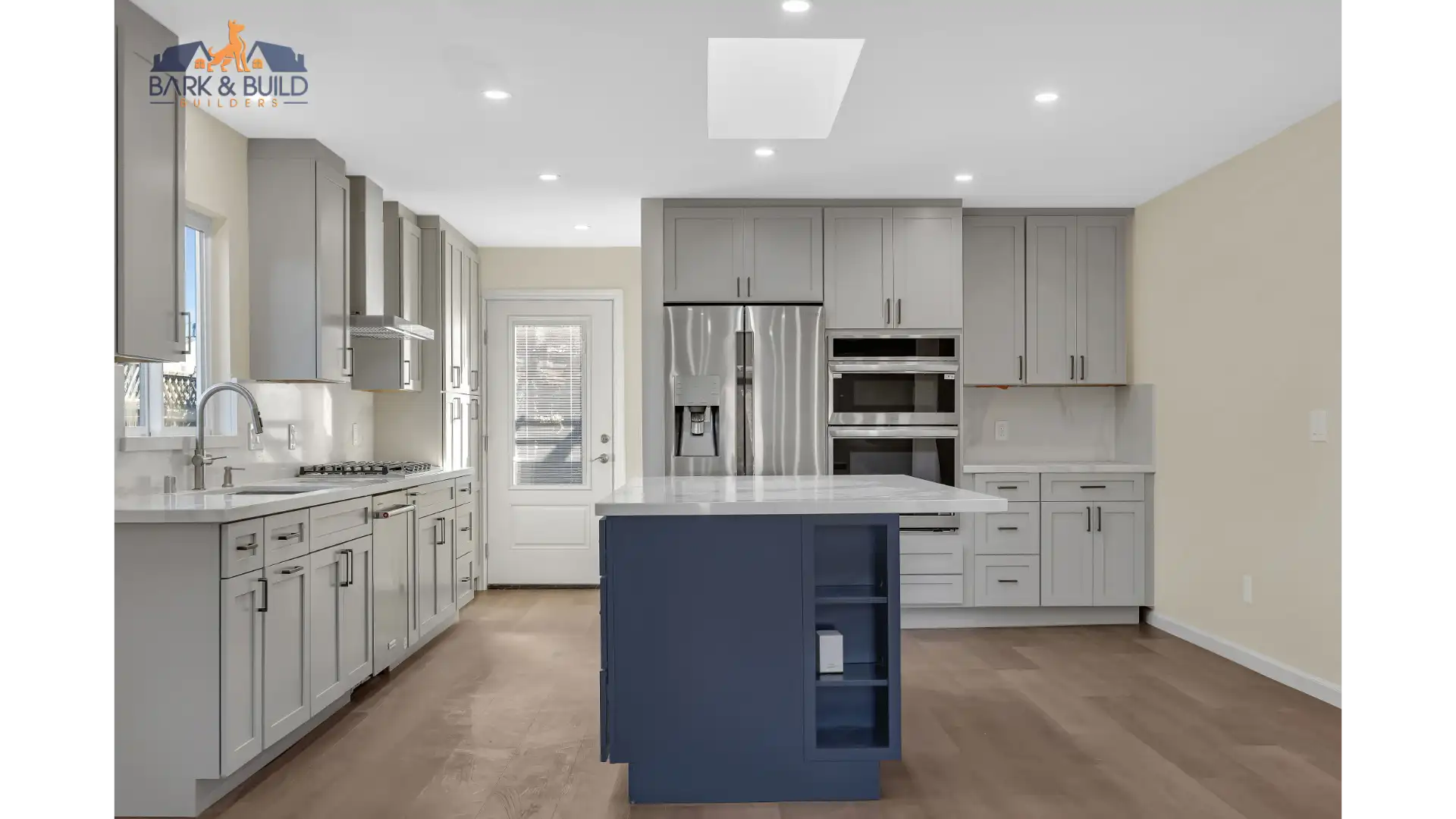
Recent Kitchen Projects Across San Mateo County
CSLB License #1119304
Schedule Your Complimentary Project Discovery Session
Investing in your property requires a partner capable of executing complex engineering and high-end architectural design with absolute certainty. We do not guess on structural loads, we do not cut corners on electrical infrastructure, and we do not leave our clients in the dark. Contact our team today.
Common Questions
High-Velocity FAQ: Kitchen Remodeling
How much does kitchen remodeling cost in Redwood City?
The average cost for a comprehensive kitchen remodel in Redwood City is $90,000 to $180,000. Pricing shifts due to the need to remediate aging 1950s-era infrastructure, such as replacing galvanized plumbing or upgrading 100-amp electrical panels. We use precise 3D spatial planning to finalize your budget before demolition, ensuring high-end materials like quartzite countertops and custom cabinetry are procured without triggering costly mid-project change orders.
How long does a typical kitchen remodeling project take?
It takes 4 to 8 weeks of active on-site construction to complete a comprehensive kitchen remodel. Prior to demolition, our design-build methodology requires an 8- to 12-week procurement phase to secure custom cabinetry and Sub-Zero integration units. By systematically sequencing the mechanical, electrical, and plumbing rough-ins, our project managers mitigate the logistical delays common along the busy El Camino Real corridor, ensuring your layout passes final municipal audits on the first attempt.
Will a kitchen remodel disrupt my daily routine?
Yes, a full-scale kitchen remodel will temporarily disable your primary cooking and sink zones. To mitigate this disruption, we construct temporary, dust-sealed efficiency kitchens with dedicated 20-amp small-appliance circuits so you can maintain basic functionality. Our site managers use HEPA air scrubbers and negative-pressure containment walls to isolate the construction zone from your active living areas, protecting your family from demolition debris and silica dust.
Do I need a permit for a kitchen remodel if it's just a small cosmetic repair?
No, minor cosmetic updates like cabinet refacing or painting do not require a building permit in Redwood City. However, the Redwood City Building Division mandates permits for any structural alterations, mechanical changes, or electrical upgrades. If your design requires moving a load-bearing header or relocating a plumbing waste stack, our in-house team handles the entire One-Stop Plan Review process to guarantee your project never receives a red-tagged inspection notice.
What warranties do you offer on kitchen remodeling labor and parts?
We provide a 10-year warranty on all structural craftsmanship and a 1-year warranty on all cosmetic finishes. As a fully bonded Class B General Building Contractor, we also transfer all original manufacturer warranties directly to you for premium components like thermostatic valves, JA8 high-efficacy lighting, and induction cooktops. We use strictly code-compliant materials, ensuring your new MEP infrastructure outlasts standard builder-grade installations.
Are there any Redwood City or state rebates available for a kitchen remodel?
Yes, California homeowners can access up to $3,200 in tax credits through the federal 25C Energy Efficient Home Improvement Credit. Additional state-level TECH Clean California rebates are available when transitioning from outdated gas appliances to high-efficiency heat pump water heaters and induction ranges. Our team generates the mandatory CF1R energy calculation reports required by Title 24, directly aligning your decarbonization upgrades with these financial incentive programs.
What is the average ROI of a kitchen remodel when selling in Redwood City?
The average ROI is 60% to 85% for a mid-to-upscale kitchen remodel in the Peninsula market. In high-value neighborhoods like Mount Carmel or Woodside Plaza, buyers expect modern open-concept flow and smart-home ecosystems. By integrating highly durable elements such as solid hardwood face frames and fully compliant GFCI receptacles, your renovation directly increases your property's valuation while standing out in the competitive San Mateo County real estate market.
Is a free estimate included with my kitchen remodeling appointment?
We offer a high-value Complimentary Project Discovery & Design Session. During this consultation, our architectural team performs a rigorous feasibility assessment of your existing load paths and electrical panel capacity, delivering actionable layout recommendations and a realistic financial roadmap rather than a fragmented subcontractor bid.