Loading...
Outdoor Living & Structural Decks — Redwood City & San Mateo County
Construct Multi-Level Composite Decks Without Failing Local WUI Fire Inspections
Bypassing cheap lumber for structural composite materials that withstand Bay Area microclimates. Bark and Build Builders engineers structural composite decks, outdoor kitchens, and heavy hardscaping across Redwood City — converting sloped or unusable property footprints into permanent exterior living extensions using architectural-grade load calculations and strict fire code compliance.


Fire Code Compliance
Navigating WUI Codes From Emerald Hills to the Fox Theatre District
Building in Redwood City means dealing with distinct topological zones and microclimates. The requirements for a flat-lot paver patio near the historic Fox Theatre district are entirely different from engineering a multi-level cantilevered deck in Emerald Hills. As you move west of Alameda de las Pulgas, you hit stringent building regulations designed to protect properties from wildfire threats.
The 2026 Wildland-Urban Interface (WUI) fire codes dictate exactly what materials can be used on the exterior of your home. We design specific ignition-resistant assemblies that satisfy city inspectors on the first pass — utilizing enclosed soffits, specific joist spacing, and approved composite materials that prevent ember intrusion. If you live in a designated hazard zone, standard wood construction is not just a bad investment; it is a liability that will stall your permitting process and complicate your homeowners' insurance.
Engineering Standard
The Difference Between Architectural Decking and Standard Carpenter Builds
Most basic decks fail at the ledger board — the critical point where the deck attaches to the house. Water gets trapped behind poorly flashed ledgers, rotting out the home's rim joist. We utilize multi-layer flashing systems, self-adhering membranes, and structural tension ties that pull the deck tight to the home's foundation.
We over-engineer our substructures, tightening joist spacing to 12 inches on-center for composite decking laid diagonally, ensuring a rigid, solid feel underfoot. We also utilize steel framing for specific spans where wood simply cannot carry the required load of an integrated outdoor kitchen or a heavy concrete fire feature.
Material Science
Combating Seasonal Moisture and Intense Sun Exposure
The Peninsula microclimate is notoriously hard on exterior materials. Heavy, concentrated winter rain followed by months of baking, direct sun causes standard wood to swell, crack, splinter, and eventually rot. Within three to five years, standard wood decking begins to fail — screws pop out as the wood violently expands and contracts.
We engineer our outdoor spaces to aggressively shed water, using structural waterproofing membranes over joists and ensuring precise slope grades throughout the hardscape to direct runoff away from your primary foundation. We refuse to install exterior surfaces that require you to become a part-time maintenance worker.
Terrain Engineering
Securing Usable Square Footage on Sloped Peninsula Lots
A large percentage of Redwood City homes sit on lots with backyards entirely unusable due to steep grades. You own the property, but you cannot set foot on half of it. Securing that usable square footage requires aggressive excavation and technical grading.
This involves executing precise cut-and-fill operations to create level terraces. We use laser levels and heavy machinery to sculpt the soil, removing excess soil off-site and bringing in engineered fill dirt, mechanically compacted in lifts. You cannot simply dump dirt to flatten a yard and build on it — it will settle and destroy whatever is built on top.
We test soil compaction to ensure the ground can bear the weight of heavy hardscaping, massive retaining walls, and concrete footings. Transforming a 30-degree slope into a flat, functional outdoor living area is heavy civil engineering scaled down for residential applications.
Case Study — Emerald Hills
Stabilizing a Collapsing Backyard Grade: From Dangerous Mudslide to Multi-Tiered Entertainment Space
A 15-year-old timber retaining wall was entirely rotted out from behind due to a lack of drainage stone. The hillside was actively pushing the wall forward, bleeding mud onto the concrete patio every time it rained.
From the Field
Engineered Retaining Wall and Class-A Fire-Rated Deck
We brought in track loaders and excavated the entire hillside, removing tons of saturated soil. We engineered a massive, segmented retaining wall using interlocking concrete block, backfilled it with clean crushed rock, and laid perforated Schedule 40 PVC pipe to catch and divert subterranean water pressure away from the structure.
Once the earth was permanently locked in place, we drilled our footings and constructed a multi-tiered composite deck that tied directly into their main living room. Because the property backed up to heavy brush, we utilized Class-A fire-rated composite decking and wrapped the entire substructure in ignition-resistant fascia, enclosing the underside to prevent ember accumulation.
We completely transformed a dangerous mudslide into a functional entertainment space that acts as a defensible barrier rather than a fire risk.
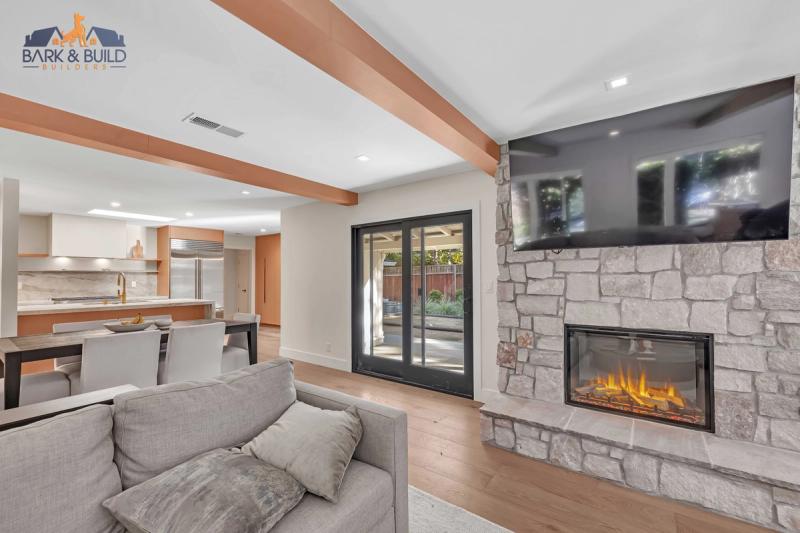
We completely transformed a dangerous mudslide into a functional entertainment space. The multi-tiered composite deck ties directly into their main living room while acting as a Class-A fire-rated defensible barrier against the adjacent brush.Owner — Bark & Build Builders, CSLB #1119304
Utility Integration
Integrating Outdoor Kitchens with Your Primary Floor Plan
An outdoor kitchen must be an engineered extension of your home's indoor-outdoor flow. We trench and run dedicated 220V electrical lines, hard-piped natural gas lines for heavy-duty grills, and insulated plumbing lines connected directly to your main sewer cleanout for exterior sinks.
We design the layout based on how you actually move through the space — analyzing door swings, traffic patterns from the interior kitchen, and wind direction to ensure grill smoke is not blowing back into your living room. The hardscaping must support the weight of masonry kitchen islands, requiring reinforced concrete pads rather than simple sand-set pavers.
Material Warning
Why Pressure-Treated Lumber Fails in Our Microclimate
Pressure-treated lumber is chemically treated to resist insects and fungal decay, but it does nothing to prevent moisture absorption or solar degradation. In the Bay Area, we have intense UV exposure for eight months of the year. When cheap pine bakes in the sun, moisture is rapidly sucked out of the grain, causing boards to cup, warp, and split.
When winter rains hit, those cracks act as channels, driving water deep into the core of the wood. The initial cost savings of softwood lumber are quickly offset by the structural degradation and the relentless cycle of power-washing, sanding, and staining just to keep it looking acceptable.
Structural Masonry
Constructing Ignition-Resistant Retaining Walls and Paver Patios
When we build retaining walls, we are managing thousands of pounds of static earth pressure. We build using CMU (Concrete Masonry Unit) blocks reinforced with vertical and horizontal steel rebar grids, fully grouted with high-strength concrete. This creates a monolithic structure that will not bow or crack under the weight of saturated soil. We never cut corners on the drainage plane — hydrostatic pressure is the number one killer of walls.
For paver patios, the secret is entirely in the base preparation. We excavate down, lay a woven geotextile fabric to prevent subsoil migration, and install a thick layer of Class II permeable base rock, compacted mechanically in two-inch lifts. This creates a load-bearing surface that will not rut or sink over time.
Zero Maintenance
Selecting Structural Composite Decking for Longevity
We cap our substructures exclusively with advanced structural composite decking. Modern capped polymer and composite boards are engineered with heavy-duty synthetic shells that are highly resistant to UV fading, scratching, and staining. They do not absorb moisture, they never require staining, and they offer industry-leading heat dissipation technologies to keep the boards cooler under the direct California sun.
Combined with our over-engineered substructures featuring tightened joist spacing and steel framing where required, the result is a deck that feels dense and solid underfoot — not the bouncy, flexing surface common to cheaply built contractor decks.
Permit Navigation
Bypassing Permit Delays for Heavy Exterior Construction
The Redwood City building department is notoriously strict when it comes to exterior construction, especially anything involving structural engineering, WUI codes, or hillside grading. Homeowners who try to pull permits themselves often get stuck in months of revision cycles because their plans lack required engineering stamps or accurate site plans.
We handle the entire bureaucratic process in-house. We submit comprehensive blueprints featuring precise framing layouts, foundation details, and material specifications that prove compliance with the latest California Building Code. By presenting a fully engineered, code-compliant package from day one, we bypass the amateur delays and keep your construction schedule moving aggressively forward.
Sensory Design
The Acoustic and Visual Realities of Professional Hardscaping
You do not want to build a beautiful outdoor dining area only to find out you are staring directly into your neighbor's second-story window. We use hardscaping, strategic elevation changes, and structural privacy screens to manipulate sightlines and create defined, intimate zones within your yard.
Acoustics also play a massive role. Hard surfaces like concrete and stone reflect sound. If you live near a busy road, we design dense masonry walls that act as acoustic barriers. We strategically position water features to create white noise that masks unwanted neighborhood sound, ensuring your backyard feels like a private retreat.
Investment
Outdoor Living Construction Costs in San Mateo County
Structural Composite Deck
$25K – $45K
Engineered substructure with Class-A fire-rated composite decking. Multi-layer ledger flashing. Steel tension ties. 3000 PSI concrete footings. Ignition-resistant fascia wrapping. Ideal for flat to moderately sloped lots.
Multi-Level Deck + Hardscape
$45K – $85K
Tiered deck system with retaining walls. Cut-and-fill grading. CMU block walls with rebar and drainage. Paver patio with compacted Class II base. Structural privacy screens. Steel framing for heavy spans. Full WUI compliance.
Complete Outdoor Kitchen Estate
$85K – $150K+
Integrated outdoor kitchen with 220V electrical, gas line, and plumbing. Masonry island with reinforced concrete pad. Multi-tier composite deck. Full hillside stabilization. Water features. Acoustic barriers. Premium everything.
Pricing includes all permits, engineering stamps, geotechnical assessment where required, and complete WUI fire code compliance documentation. Budget finalized through exhaustive pre-construction site assessment.
Construction Phases
4 to 8 Weeks of Active Construction, Engineered for Permanence
Pre-Construction: 4–8 Weeks
Design, Engineering & Permitting
Site survey and topographic mapping. Structural load calculations and lateral bracing design. WUI fire code material specifications. Architectural blueprints with framing layouts. Municipal permit submission with engineering stamps. Material procurement — composite decking, CMU blocks, steel framing.
Weeks 1–3
Grading, Excavation & Foundation
Heavy excavation and cut-and-fill operations. Engineered fill compacted in lifts. Retaining wall construction with drainage aggregate. 3000 PSI concrete footings poured with steel saddles. Utility trenching for outdoor kitchen — electrical, gas, plumbing. Base rock compacted for paver patios.
Weeks 4–8
Framing, Decking, Finishes & Inspection
Structural subframe erected — steel and engineered lumber. Composite decking installed with 12" OC joist spacing. Ledger board multi-layer flashing system. Outdoor kitchen masonry and appliance connections. Paver patio set and leveled. Privacy screens and acoustic features. Final WUI and structural inspections passed.
Process Transparency
What to Expect During the Grading and Excavation Phase
The first phase is violent, loud, and messy. You will see heavy machinery tearing up your existing yard. We will be trenching utility lines, scraping organic topsoil, and off-hauling dump trucks full of dirt. Your yard will look like a commercial job site because, structurally, it is one.
During this phase, we are establishing the critical elevations that dictate water runoff — shooting grades with laser transits to ensure water flows away from your house at a minimum slope of 2%. We compact base materials using heavy plate compactors. It is an intense process, but the only way to establish a bulletproof foundation for the high-end finishes that follow.
Pest Prevention
Protecting Your Investment from Subterranean Termites
The Bay Area is prime territory for subterranean termites, and your outdoor living space is their first point of contact. Standard deck builders often make the critical error of allowing wood posts to contact the earth or laying untreated joists too close to the soil grade.
We eliminate this threat entirely. All structural posts are elevated above grade on poured-concrete piers and secured with galvanized-steel standoff bases that break the wood-to-earth connection. We ensure adequate clearance under all decking frames for proper airflow. By using steel framing for low-clearance builds and wrapping with structural composite, we systematically eliminate the food sources pests rely on.
Local Operations
Serving Redwood City and the San Francisco Peninsula
Our dispatch hub is centrally located to execute heavy exterior construction and complex grading projects across the entire Redwood City footprint and the surrounding Peninsula. We have engineered custom decks and retaining walls everywhere from the sun-drenched flatlands of Mount Carmel and Centennial to the challenging steep-grade properties in Farm Hill, Emerald Hills, and Palomar Park.
Because we understand the specific soil conditions, localized WUI fire codes, and distinct zoning requirements of these micro-neighborhoods, we deploy our crews with extreme efficiency. Whether you are dealing with expansive clay soils near the bay or require heavy hillside stabilization near the western ridges, our structural framing and hardscaping teams are equipped for the geographical realities of your property.
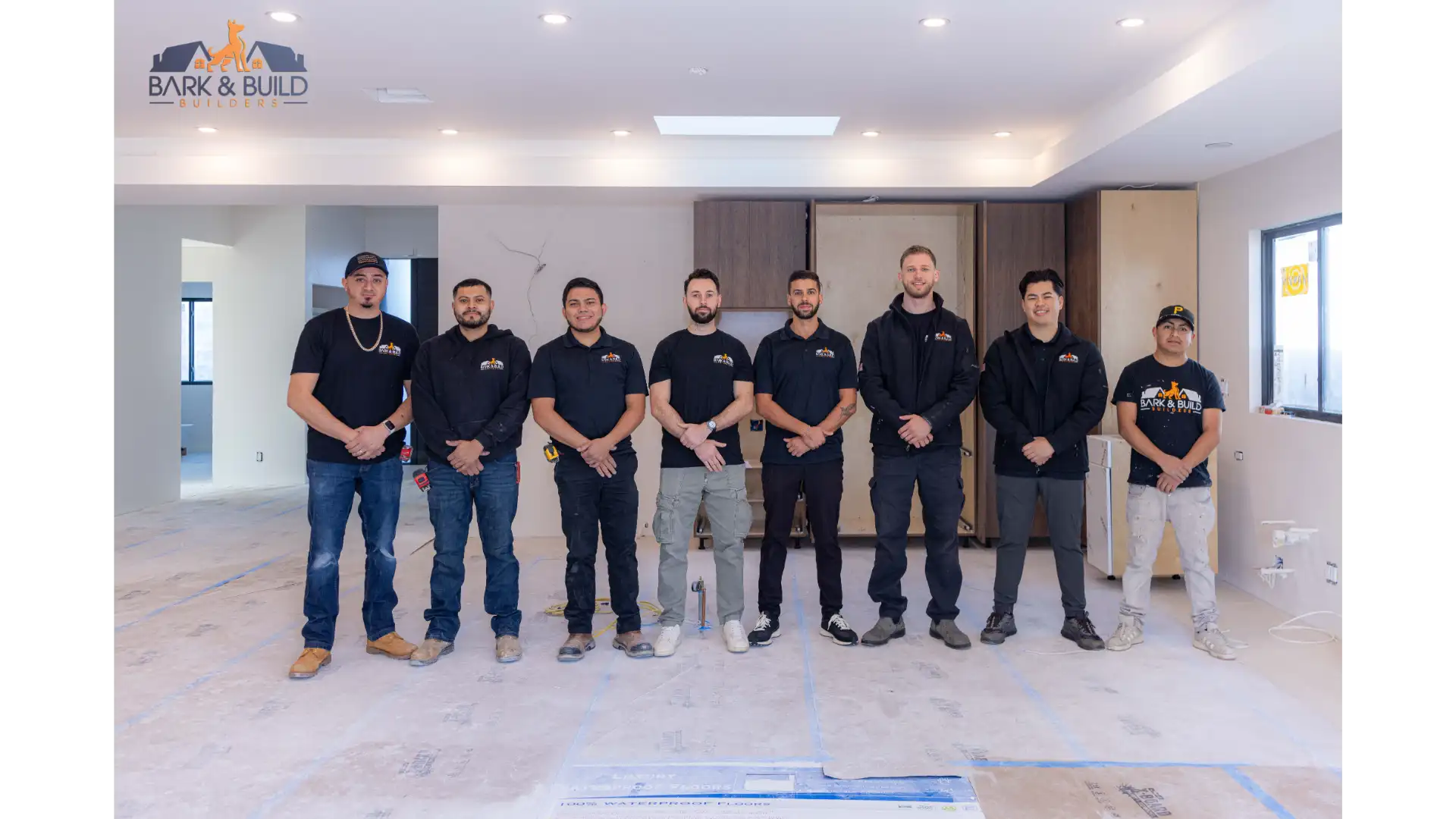
Structural Outdoor Living Team
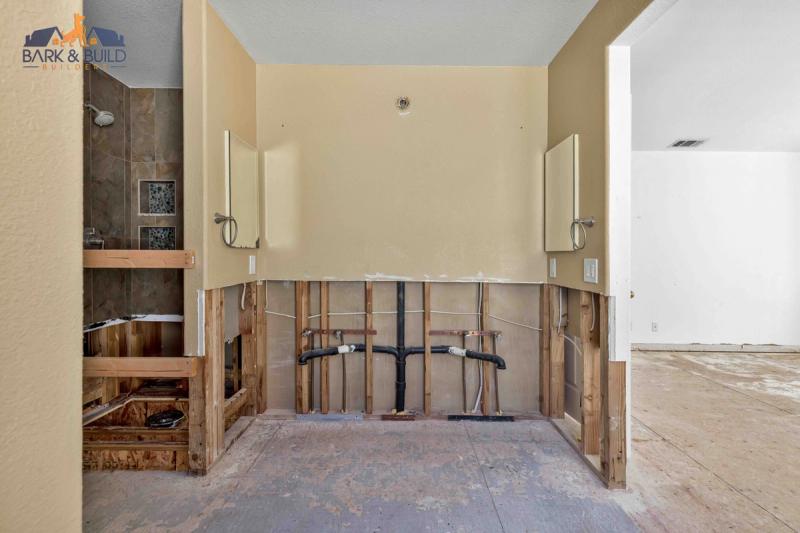
Our in-house crew of project managers, structural framers, concrete masons, hardscaping specialists, and licensed plumbers and electricians executes every phase of your outdoor living project. We handle the heavy civil engineering, the fire-rated assemblies, and the precision finishes. CSLB License #1119304 — fully bonded and insured.
Our Work


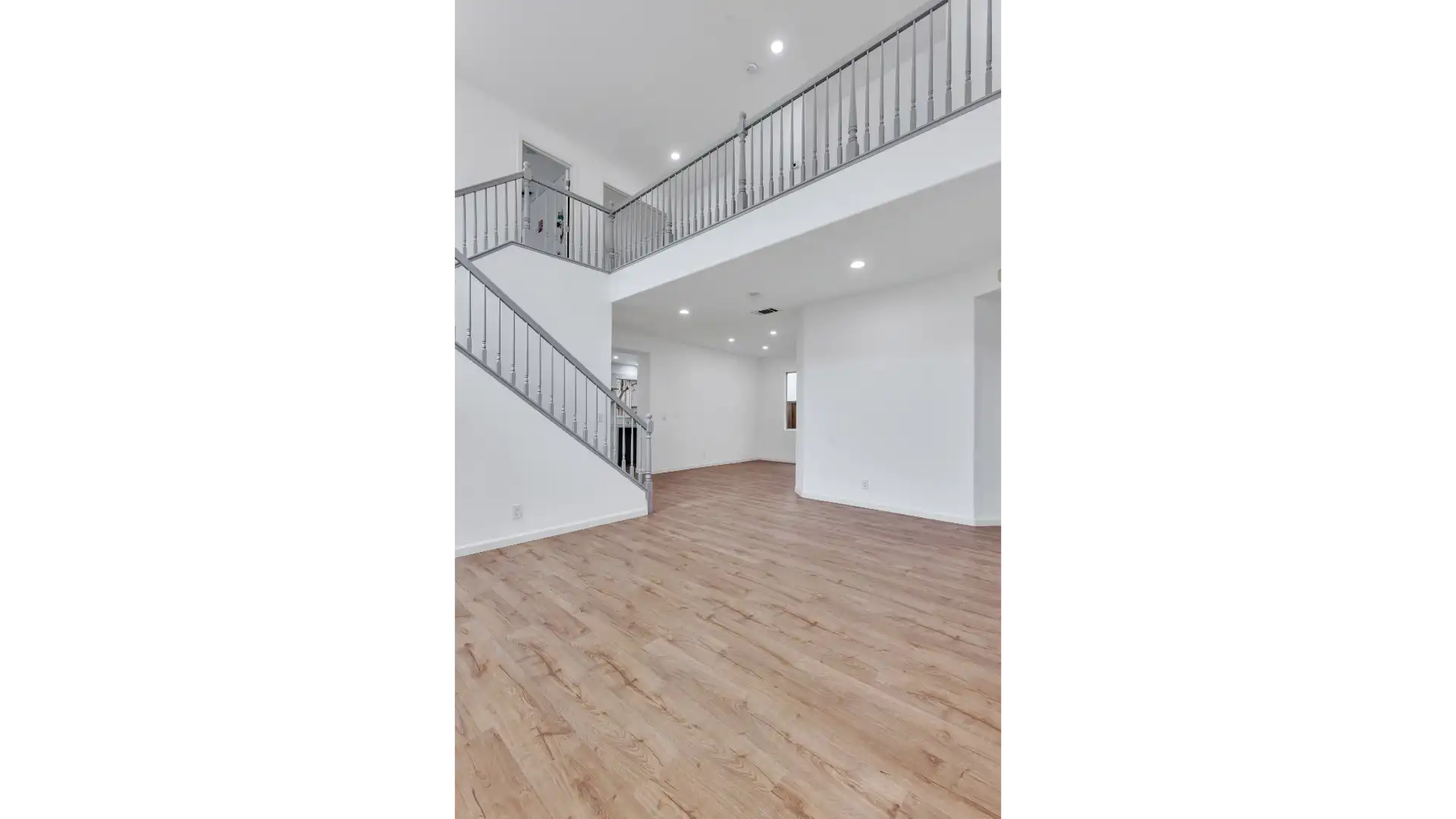
Recent Outdoor Living Projects Across San Mateo County
CSLB License #1119304
Schedule Your Structural Lot Assessment
If you are tired of unusable sloped property, rotting wood, and wasted exterior space, it is time to invest in permanent durability. We are ready to review your property lines, assess your soil conditions, and engineer a structural composite deck and hardscaping system that actually expands your usable square footage. Contact us today.
Common Questions
High-Velocity FAQ: Outdoor Living Construction
How much does a structural composite deck cost in Redwood City?
The average starting cost for an engineered structural composite deck in Redwood City ranges from $25,000 to $45,000. This baseline accounts for the heavy civil engineering required to navigate sloped Peninsula topographies and the active clay soils prevalent in our area. We calculate precise load-bearing spans and utilize Class-A fire-rated composite materials to meet strict local WUI mandates.
How long does a typical exterior hardscaping project take?
A complete structural hardscaping project takes between 4 and 8 weeks of active construction. Timeline variables rely heavily on the initial cut-and-fill operations, necessary hillside grading, and curing time for our 3000 PSI concrete footings. Because securing municipal approvals often dictates the real start date, we handle all architectural blueprints and lateral load calculations in-house to aggressively bypass local plan-checker delays.
What warranties do you offer on custom deck labor and materials?
We provide a 5-year structural workmanship warranty alongside the manufacturer's 25-to-50-year fade and stain guarantees on all capped polymer boards. Because the Peninsula microclimate subjects exteriors to intense UV exposure and seasonal moisture, we use advanced structural composite decking and self-adhering ledger flashing systems. Our warranty covers the heavy masonry and steel tension ties that anchor your outdoor kitchen or deck to your primary floor plan.
Do you have experience working with HOAs in Emerald Hills?
Yes, we actively manage architectural review board approvals for structural exterior extensions across Emerald Hills and Palomar Park. Sloped neighborhood HOAs demand exact site plans detailing property line setbacks, utility easements, and heavy machinery access routes. We submit comprehensive blueprints featuring precise framing layouts and CMU block specifications that satisfy both strict community aesthetics and the 2026 WUI fire codes.
Do you offer financing for structural hardscaping?
We do not offer in-house financing for heavy exterior construction. Most of our clients utilize home equity lines of credit (HELOCs) or private construction loans to fund their backyard expansions. We provide fully itemized contracts detailing the cost of engineered fill dirt, structural waterproofing membranes, and custom masonry kitchen islands so your lender has exact figures for the draw schedule.
Do I need a permit for a retaining wall?
Yes, the Redwood City building department legally requires a permit for any retaining wall holding back more than 3 feet of earth or supporting a surcharge. A surcharge includes the weight of a driveway, a sloped yard, or a new multi-level composite deck built above the wall. We build using CMU blocks reinforced with steel rebar grids and install heavy drainage aggregate to prevent hydrostatic pressure from causing structural collapse.
What are the specific Redwood City codes for WUI-compliant decks?
The 2026 WUI fire codes mandate the use of ignition-resistant fascia, enclosed soffits, and approved non-combustible substructure wrapping for homes west of Alameda de las Pulgas. Standard pressure-treated pine will fail municipal plan checks in these designated hazard zones. We engineer our exterior extensions using Class-A fire-rated assemblies and specific joist spacing to prevent wind-blown ember intrusion.
What are the risks of DIY hillside grading and paver patios?
The primary risk of DIY hillside grading is catastrophic structural failure caused by uncompacted soil and unmanaged hydrostatic pressure. Hand-digging a patio base without laying woven geotextile fabric and mechanically compacting Class II permeable base rock in two-inch lifts guarantees your pavers will rut and sink. If you alter topographies without laser transits to establish a minimum 2% slope away from your foundation, you will drive subterranean water directly into your home.